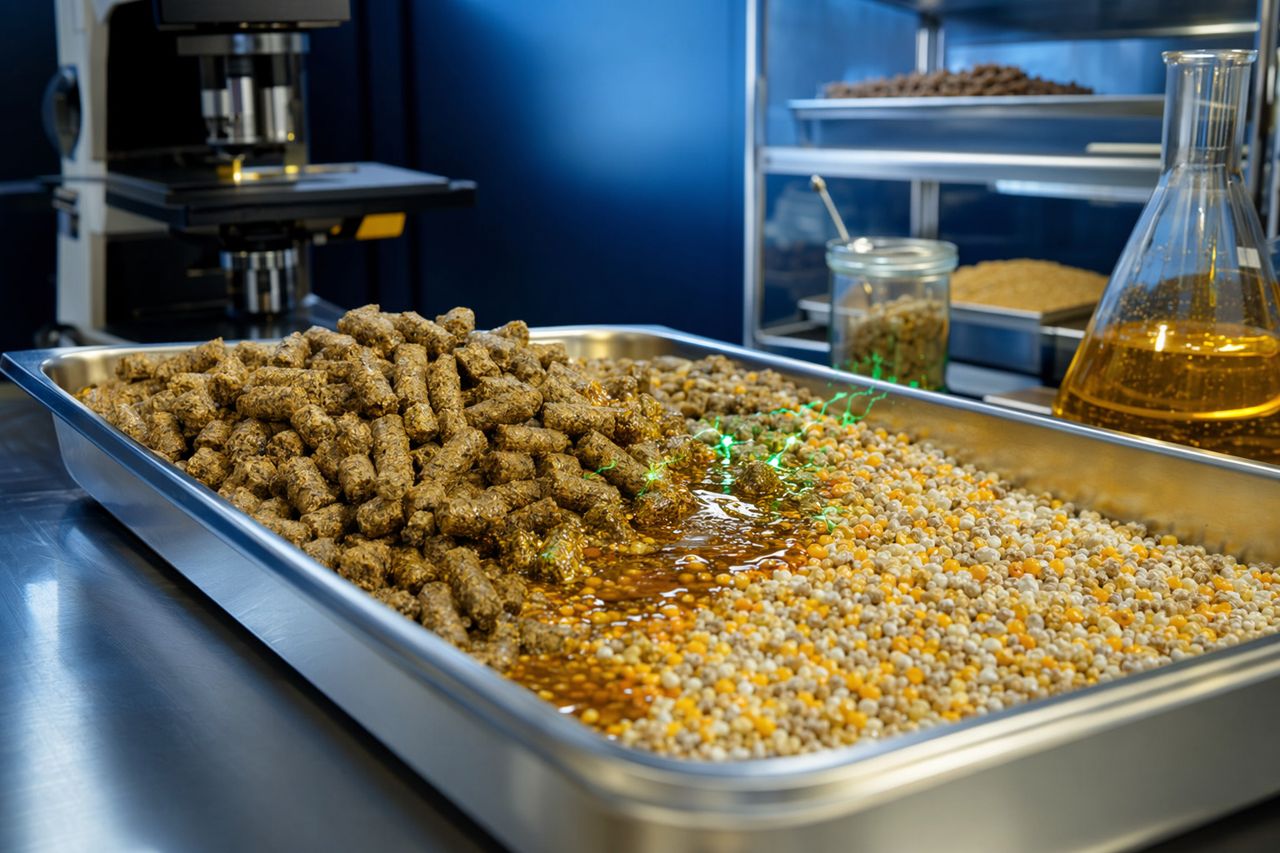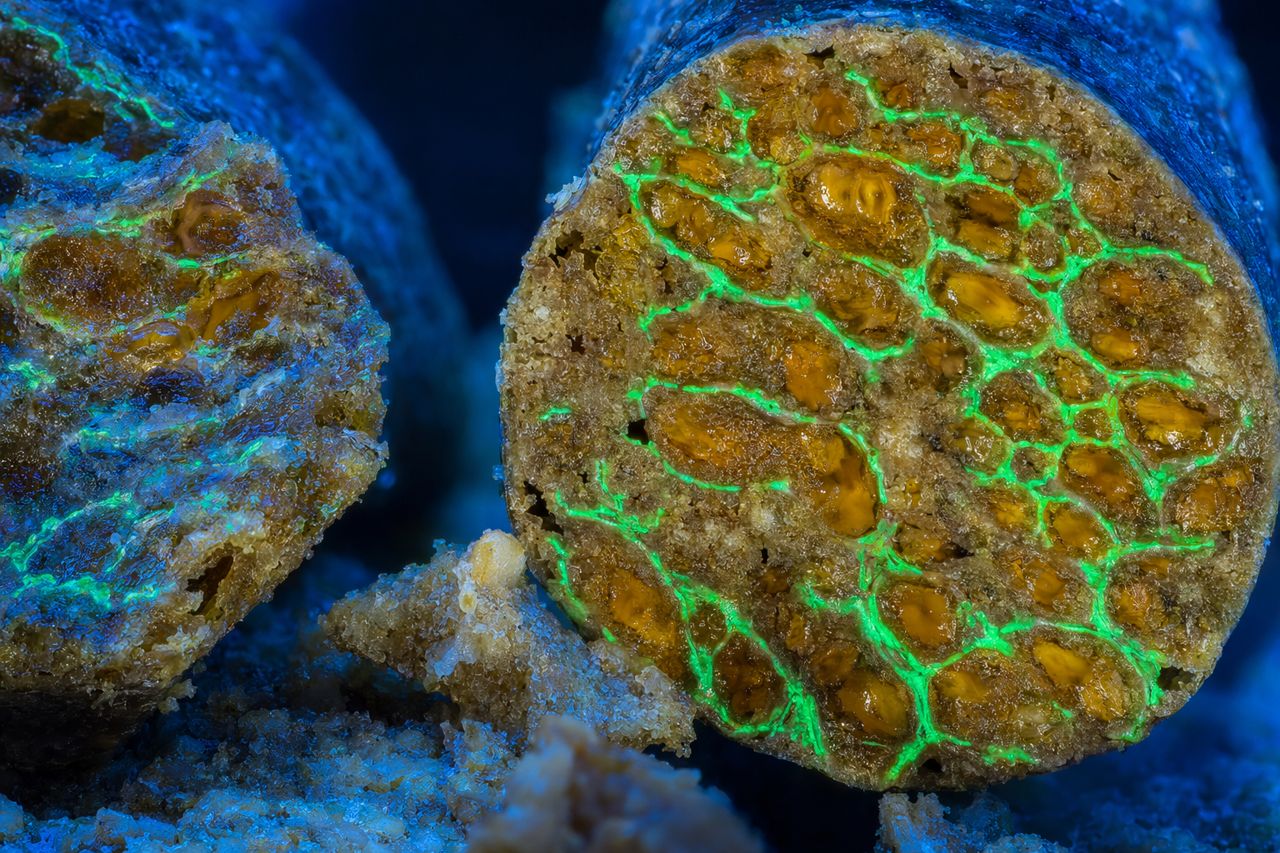

Wholesale and bulk lipase for feed mills, premixers, integrators and feed-additive distributors working on fat utilisation in poultry, swine and aquafeed rations. Supply is quoted per order against your species, fat source and processing route (mash, pellet or post-pellet liquid).
Request a quote: send the product you make, the quantity per order or per month, and the destination country. Request a quote
Lipase for animal feed applications
Dietary fat is one of the most valuable energy inputs in feed, but it is not always used efficiently. Fat source quality, animal age, bile salt availability, gut conditions, processing exposure, and ration design can all influence how well triglycerides are broken down and absorbed.
Lipase Enzyme Solutions supplies lipase for feed manufacturers, premixers, and nutrition teams that need a practical enzyme option for fat utilization strategies. Lipase (triacylglycerol acylhydrolase) catalyzes the hydrolysis of ester bonds in triglycerides at the oil-water interface, supporting the formation of fatty acids, mono-glycerides, di-glycerides, and glycerol-containing fragments that can be more accessible in digestion.
This is not a generic catalog approach. The value of feed lipase depends on substrate fit, process compatibility, blend design, and the target animal program.
Where lipase fits in feed programs
Lipase may be used in complete feed, concentrates, premixes, and enzyme blends where the formulation goal is to improve the use of added oils, rendered fats, full-fat ingredients, or native lipid fractions in raw materials.
Common application areas
- Poultry feeds — supports fat digestion strategies in broiler, layer, and breeder programs, especially where high-energy diets, variable oils, or young-bird performance are key formulation concerns.
- Swine feeds — used in nursery, grower-finisher, and sow nutrition where fat digestibility, feed efficiency, and energy contribution from lipid sources are under evaluation.
- Aquaculture feeds — applicable in high-fat rations and marine or plant-oil systems where lipid utilization and pellet process constraints must be considered together.
- Ruminant and livestock nutrition — may be evaluated in specialty feed, calf nutrition, and targeted formulations where fat source behavior and digestive access are important.
- Multi-enzyme systems — can be combined with carbohydrases, proteases, phytase, organic acids, emulsifiers, or probiotics when the nutrition strategy calls for broader substrate coverage.
What lipase does in the ration
Lipase works at the boundary between hydrophobic lipid droplets and aqueous digestive fluid. In practical feed terms, that interface matters. Fats do not behave like starch or protein in the gut; they must be dispersed, emulsified, and presented to the enzyme before efficient hydrolysis can occur.
A well-selected feed lipase can help formulation teams address:
- more complete use of added oil and animal fat sources
- inconsistent digestibility from changing raw material supply
- young-animal diets with limited endogenous digestive capacity
- high-energy formulations where lipid contribution is central to feed cost control
- enzyme blend designs that target multiple nutrient fractions
- trial programs measuring feed conversion trend, apparent energy contribution, or production consistency
Lipase Enzyme Solutions helps buyers match lipase format and specification to the real feed system instead of treating lipase as a one-size ingredient.
Why feed manufacturers choose lipase
Interface-focused enzyme selection
Lipase performance depends on access to lipid surfaces. We prioritize lipase options selected for feed-relevant lipid systems, including vegetable oils, rendered fats, and mixed raw material lipid fractions.
Process-aware formats
Feed enzymes must survive handling, mixing, and process exposure. Depending on your production route, Lipase Enzyme Solutions can discuss powder, granulated, coated, or liquid-format options for premix and feed mill use.
Blend compatibility
Lipase is often not used alone. We support compatibility discussions for enzyme blends, mineral premixes, organic acid systems, emulsifier strategies, and other functional additives that may share the same premix or final feed environment.
Specification discipline without trader-confidential details
We provide buyer-useful specifications, documentation, and release criteria appropriate for industrial procurement while keeping proprietary assay methodology and trader-confidential unit conventions out of public copy.
Formulation and procurement considerations
Before quoting lipase for animal feed, we typically ask for a short technical snapshot. The better the context, the cleaner the recommendation.
Key inputs for selection
- Target species and life stage — broiler starter, nursery pig, aquafeed, layer, calf, or other program.
- Fat source — soybean oil, palm oil, poultry fat, tallow, fish oil, full-fat soy, rice bran, DDGS, or mixed lipid sources.
- Feed format — mash, pellet, crumble, extruded feed, concentrate, or liquid application.
- Process exposure — premix route, conditioning profile, pelleting stress, post-pellet application, or extrusion conditions.
- Blend partners — carbohydrase, protease, phytase, emulsifier, acidifier, vitamin-mineral premix, or carrier system.
- Commercial goal — energy matrix support, fat source flexibility, cost optimization, young-animal digestion support, or field trial validation.
Practical benefits for B2B buyers
- Reduce guesswork when selecting a lipase for high-energy feed programs.
- Build enzyme blends around substrate logic instead of generic inclusion habits.
- Support fat utilization strategies without changing the entire formulation architecture.
- Improve procurement clarity with format, documentation, and supply route aligned early.
- Create cleaner trial designs by defining fat source, animal stage, and process conditions upfront.
How to evaluate lipase in feed trials
Lipase Enzyme Solutions does not position lipase as a shortcut around proper nutrition validation. Feed trials should be designed around the specific species, fat source, and commercial objective.
Common evaluation points include:
- feed conversion trend and energy response
- body weight or production output consistency
- fat source flexibility in the ration
- young-animal performance during digestive transition
- pellet quality and handling compatibility
- manure or litter observations where relevant
- economic return under the customer’s ingredient pricing model
We can discuss the application with your nutrition team and tell you which documents are available for that grade.
Supply formats and documentation
Available format depends on the application and manufacturing route. Lipase Enzyme Solutions can support industrial buyers with appropriate documentation for procurement, quality, and regulatory review, including product specification, safety documentation, batch traceability, storage guidance, and application notes.
For feed mills and premix manufacturers, we recommend discussing packaging, shelf-life expectations, carrier compatibility, and shipping conditions before locking a quote.
Request a quote or get pricing
Share your feed type, species, fat source, process route, and expected purchase volume. Our team will review the application and respond with fit, format, and pricing options.
Request a bulk lipase quote
Wholesale and bulk supply for manufacturers, formulators and resellers. To get a quote, send the product you make, the quantity per order or per month, and the destination country, and tell us your application and preferred format (powder, liquid or granule). Pricing, pack format and lead time are quoted per order, and we tell you which documents are available for that grade.