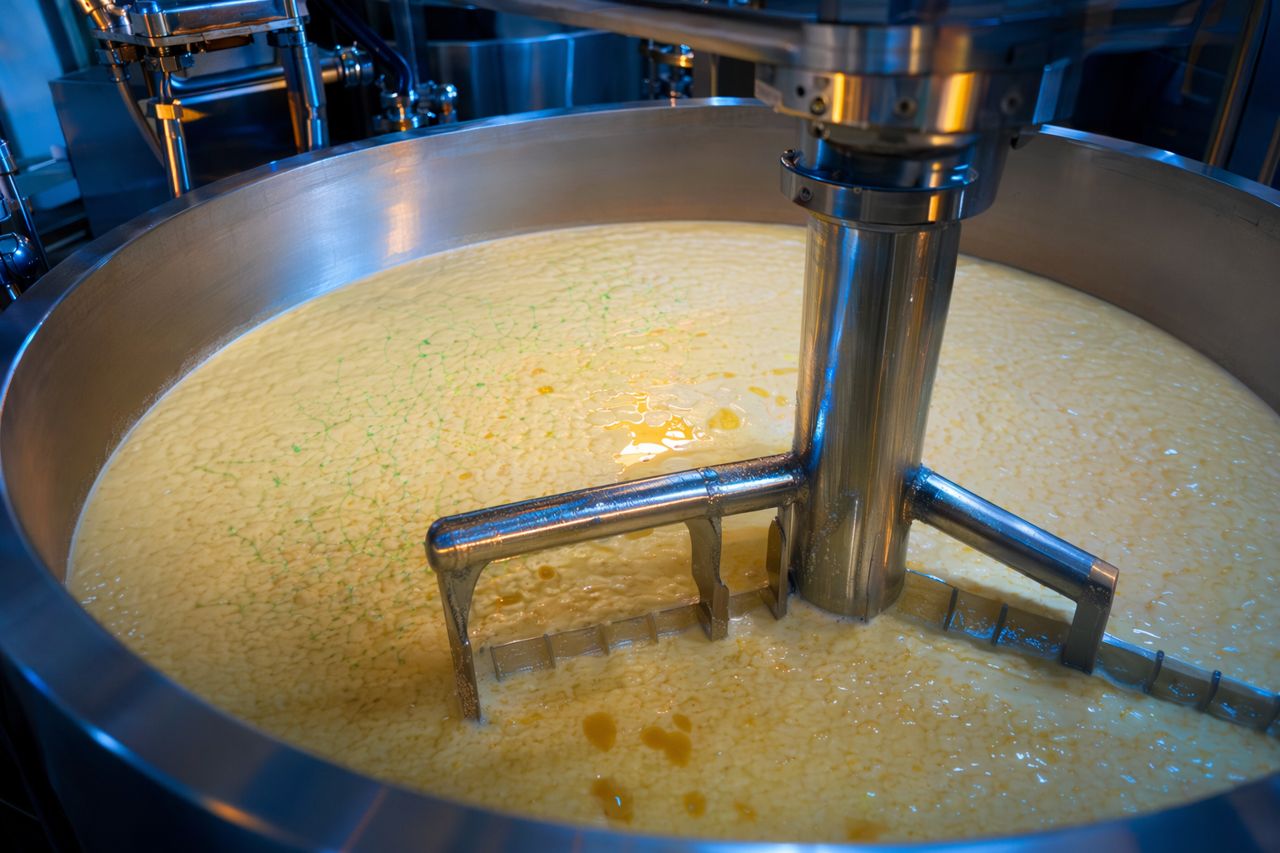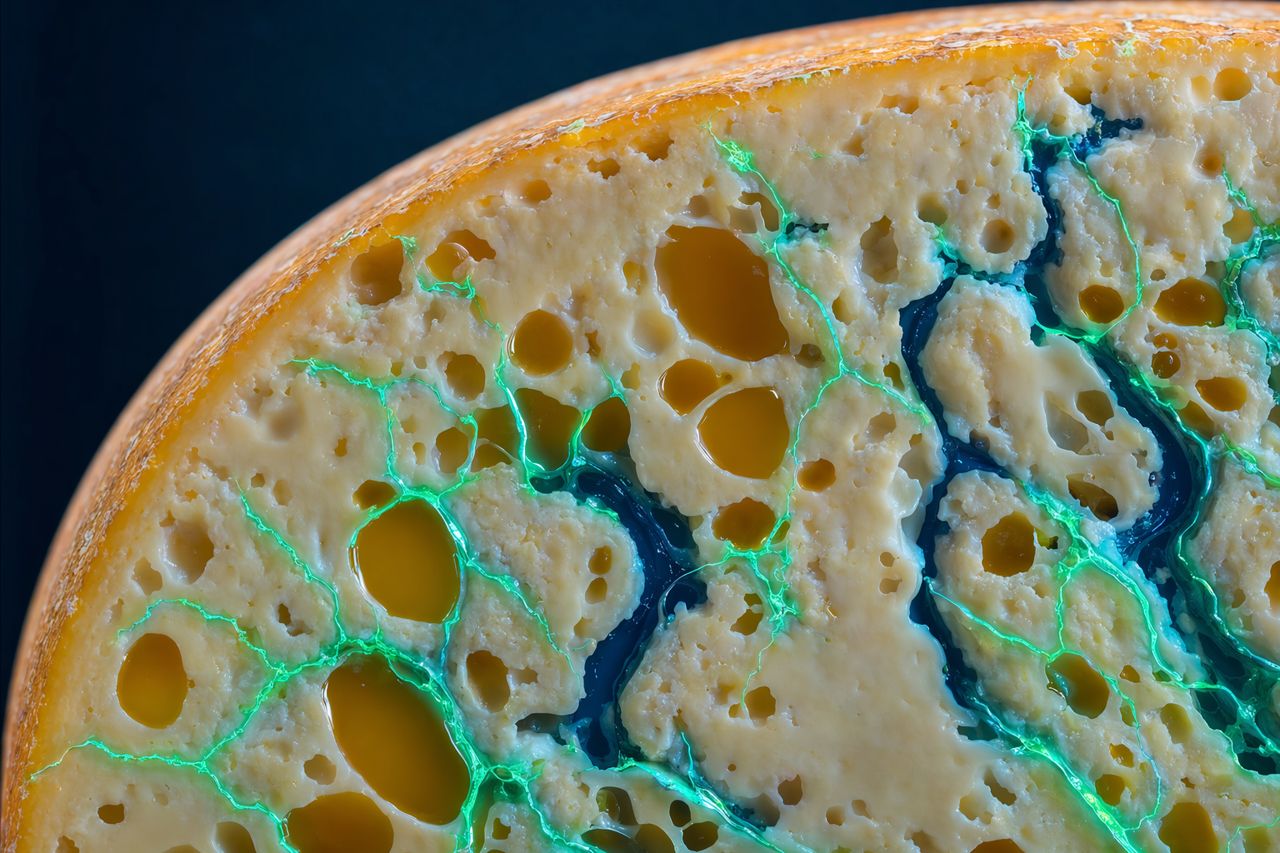

This lipase is used to build milk-fat flavour on purpose: in enzyme-modified cheese pastes, concentrated dairy flavour systems and savoury bases for snacks, sauces and seasonings, and to steer aroma during ripening of specialty styles. Lipase Enzyme Solutions supplies it, in powder or liquid presentation, to dairy processors, flavour houses and cheese-ingredient manufacturers; pricing is by quote against your process and volume. Ask for a bulk quotation through the quote form further down this page, stating substrate, point of addition and target flavour profile.
Lipase for controlled dairy flavor
Milk fat is a powerful flavor substrate. With the right lipase, it becomes a controllable process lever.
Lipase Enzyme Solutions supplies Lipase (triacylglycerol acylhydrolase) for dairy processors, flavor houses, cheese ingredient manufacturers, and application teams that need targeted fat breakdown without losing process discipline. In cheese and specialty dairy systems, lipase catalyzes the hydrolysis of triglycerides at the oil-water interface, releasing free fatty acids that shape aroma, sharpness, creaminess, and piquant character.
Use it where dairy flavor needs to be built deliberately: not left to chance.
Who buys dairy flavour lipase in bulk
- Flavour houses building concentrated cheese and butter notes for snacks, sauces and ready meals.
- Enzyme-modified cheese producers making pastes and powders for food manufacturers.
- Cheese-ingredient and processed-cheese makers who need a stronger dairy note in their products.
- Seasoning and snack manufacturers working with dairy flavour bases.
- Ingredient distributors supplying dairy and flavour customers.
What to send with an inquiry: the dairy substrate (milk, cream, butterfat, curd or slurry), where the lipase is added, the flavour target, the quantity per order or per month, and the destination country. Request a quote
Where dairy lipase creates value
Cheese ripening support
Lipase can help intensify and steer flavor development during ripening. It is used when a cheese program needs more defined aroma release, faster flavor build, or a differentiated sensory profile.
Common objectives include:
- Sharper and more aromatic notes in specialty cheese styles
- Better flavor expression in shorter or more constrained ripening programs
- More consistent fat-derived character from batch to batch
- Support for piquant, buttery, creamy, or aged flavor direction
Enzyme-modified cheese and dairy flavor bases
For enzyme-modified cheese, lipase is often used alongside proteolytic systems to create concentrated dairy flavor ingredients. The goal is not simply hydrolysis; it is a controlled sensory curve.
Lipase can support:
- Enzyme-modified cheese pastes and slurries
- Concentrated cheese flavor systems
- Savory dairy bases for snacks, sauces, soups, and seasonings
- Cream, butter, and milk-fat-derived flavor ingredients
- Processed cheese flavor enhancement
Italian-style, blue, and specialty profiles
Different dairy applications call for different fatty acid release patterns. Shorter-chain fatty acids can bring sharp, pungent, and piquant impact; longer-chain fractions can contribute depth, body, and lingering dairy character. The process target determines the enzyme choice, dosing strategy, and point of addition.
Lipase Enzyme Solutions helps buyers align lipase selection with the intended cheese style, substrate format, and sensory endpoint.
How lipase works in dairy systems
Lipase acts at the interface between lipid droplets and the aqueous phase. In milk-fat-rich systems, that interfacial behavior matters. Emulsion structure, fat accessibility, mixing intensity, temperature, pH, salt, moisture, and contact time all influence the hydrolysis profile.
Key process variables include:
- Substrate format: milk, cream, butterfat, cheese curd, slurry, paste, or rework stream
- Fat accessibility: homogenization, emulsification, melt state, and droplet size
- Process point: milk standardization, curd treatment, slurry reaction, flavor base preparation, or post-blend addition
- Reaction environment: pH window, temperature profile, moisture, salt, and residence time
- Sensory endpoint: buttery, creamy, aged, sharp, piquant, blue, or savory dairy direction
The same enzyme can behave differently across substrates. Lipase Enzyme Solutions’ role is to help narrow the selection before plant trials, so your team tests a practical path instead of a broad guess.
Benefits for industrial dairy buyers
- Controlled flavor development: build targeted lipolytic character rather than relying only on time or native microflora
- Process flexibility: fit lipase into ripening, slurry reaction, ingredient manufacture, or specialty dairy workflows
- Batch consistency: improve repeatability by defining enzyme form, addition point, and reaction conditions
- Flavor concentration: support high-impact dairy bases for downstream formulation
- Shorter development cycles: reduce trial complexity with application-specific guidance
- Commercial documentation: align specifications, allergen position, origin, and handling requirements early in qualification
Form and handling considerations
Industrial dairy programs may require different enzyme formats depending on the process design. Lipase Enzyme Solutions can discuss options for powder or liquid presentation, carrier preference, dispersibility, storage expectations, and compatibility with the target dairy matrix.
Typical buyer questions we help resolve:
- Should the lipase be added directly to curd, milk fat, or a prepared slurry?
- Is the priority fast aroma release or gradual ripening support?
- Does the process need a mild creamy profile or a sharp piquant profile?
- Will heat treatment be used to stop the reaction at a defined point?
- Are there allergen, vegetarian, kosher, halal, or documentation requirements?
- What packaging format fits purchasing, handling, and plant use?
Application development notes
For cheese and dairy flavor systems, small changes in process conditions can create large sensory differences. A structured trial plan should define the target flavor, the substrate, the reaction endpoint, and the stop condition before the enzyme is introduced.
Recommended qualification approach:
- Define the sensory target and unacceptable off-notes.
- Identify the substrate and fat level range.
- Select the point of addition and contact time window.
- Run bench trials with a clear control and sensory checkpoints.
- Confirm process stop conditions and downstream stability.
- Scale into pilot or production with mixing and temperature alignment.
This keeps lipase evaluation practical for R&D, production, procurement, and quality teams.
Documentation and supply conversation
With the quote, we tell you which documents are available for that grade.
If your dairy application has a defined target profile, share the substrate, process conditions, intended use, and annual volume range. We will help identify a suitable lipase format and commercial path.
Request a quote
Tell us what you are making and what flavor direction you need. Lipase Enzyme Solutions will respond with practical guidance and pricing for your dairy lipase requirement.
Pricing, pack format and lead time are quoted per order. Request a quote for bulk dairy flavour lipase.