
Wholesale lipase for makers of drain, grease-trap and wastewater treatment products, service companies and distributors handling fat, oil and grease loads. Grade, pack and pricing are quoted per order against your system and blend.
Request a quote: send the product you make, the quantity per order or per month, and the destination country. Request a quote
Lipase for fat, oil, and grease management
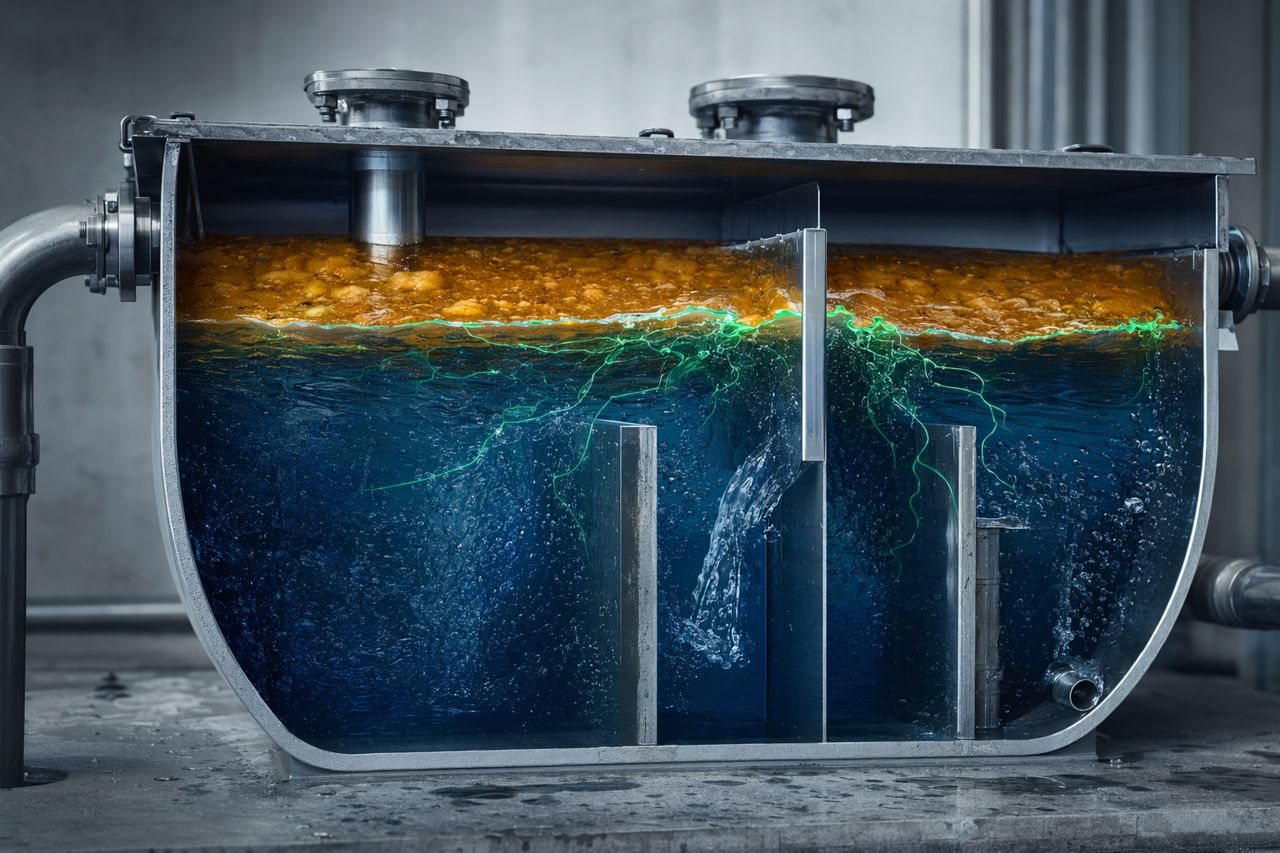
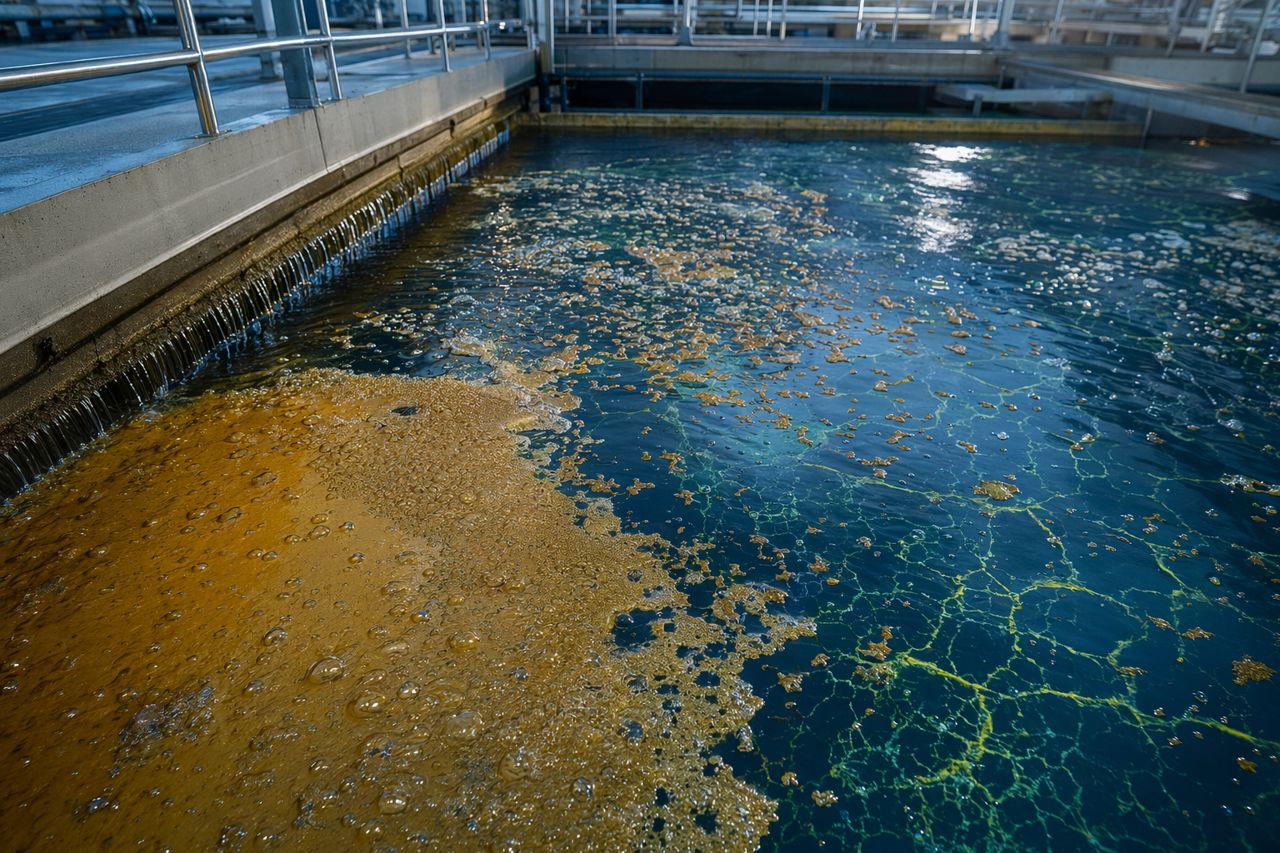
Fat, oil, and grease do not behave like ordinary wastewater solids. They float, cool, smear across surfaces, trap organics, and form persistent deposits in drains, grease traps, lift stations, wet wells, equalization tanks, and treatment systems. Lipase is built for buyers who need a practical biochemical tool for lipid-heavy maintenance programs and wastewater pretreatment strategies.
Lipase, properly known as Lipase (triacylglycerol acylhydrolase), catalyzes the hydrolysis of triglycerides at oil-water interfaces. In FOG applications, that interfacial action helps convert bulky lipid residues into smaller fatty acid and glycerol fractions that are easier to disperse, mobilize, and handle within a controlled treatment plan.
Where lipase adds value
- Grease trap and interceptor maintenance: Support routine biological and enzymatic programs where lipid accumulation reduces holding capacity and increases pump-out frequency.
- Drain line and collection-system care: Help address greasy films and soft deposits that narrow flow paths and retain odor-generating material.
- Lift stations and wet wells: Reduce lipid-rich surface mats and wall adhesion when used as part of a scheduled maintenance protocol.
- Food processing wastewater pretreatment: Improve handling of dairy, meat, edible oil, bakery, sauce, snack, and prepared-food residues before downstream treatment.
- Odor and sludge management support: Limit anaerobic pockets created by grease blankets and trapped organics, improving system hygiene and operating consistency.
Why FOG needs an interfacial enzyme
FOG problems are surface problems. Triglycerides accumulate at pipe walls, tank edges, skimmer zones, and emulsion boundaries because lipids resist mixing with water. Lipase works at that same boundary. Rather than relying only on mechanical removal, surfactant dispersion, or caustic shock, an enzyme-based approach targets the chemical structure of triglycerides directly.
Process effects buyers typically look for
- Cleaner conveyance surfaces over time
- Lower risk of soft grease blockages and re-adhesion
- More manageable grease trap solids and scum layers
- Reduced odor pressure from trapped biodegradable residues
- Smoother flow in systems with recurring lipid load
- Better consistency ahead of biological wastewater treatment
Results depend on wastewater composition, temperature profile, contact time, hydraulic pattern, dosing access, and compatibility with cleaners, oxidizers, disinfectants, or high-pH events. Lipase Enzyme Solutions supports fit-for-use selection so lipase is deployed where it can actually contact the lipid phase.
Application fit
Strong fit
- Kitchens, commissaries, and foodservice complexes with predictable FOG loading
- Food and beverage plants with lipid-bearing process water
- Rendering, meat, dairy, edible-oil, and sauce production wastewater
- Grease traps, interceptors, wet wells, lift stations, and equalization basins
- Preventive maintenance programs where scheduled dosing is preferred to emergency intervention
Use with care
- Systems exposed to aggressive oxidizers or disinfectant spikes
- Lines with hard mineral scale as the primary restriction
- Cold systems where fats are highly solidified and contact is limited
- Sites using strong caustic or solvent-based degreasing immediately before enzyme addition
- Hydraulic zones with short residence time and poor mixing
Formulation and deployment considerations
Industrial FOG programs usually succeed or fail on contact. Lipase should be placed where lipid residues, water, and residence time overlap. In many systems, the best strategy is scheduled addition during lower-flow windows, upstream of the grease-bearing zone, with enough dispersion to reach walls, mats, and emulsion interfaces.
Key selection variables include:
- Feedstock profile: animal fats, vegetable oils, dairy fats, frying oils, emulsified sauces, or mixed kitchen waste
- Temperature behavior: whether FOG remains fluid, semi-solid, or waxy through the operating cycle
- pH environment: normal wastewater pH, cleaner carryover, and shock events
- Contact architecture: trap geometry, pipe length, tank mixing, wet-well turnover, and dead zones
- Chemical compatibility: detergents, quats, chlorine donors, peroxides, degreasers, and antimicrobial residues
- Operational goal: deposit control, odor reduction support, pretreatment stability, or emergency recovery assistance
What Lipase Enzyme Solutions supplies
Lipase Enzyme Solutions provides lipase options for industrial buyers evaluating FOG management programs, wastewater pretreatment aids, and maintenance formulations. We help define the appropriate enzyme format, use environment, and specification priorities without overcomplicating procurement.
Typical buyer questions we can support:
- Which lipase format is appropriate for a drain, interceptor, or process wastewater stream?
- What compatibility issues should be checked before field use?
- How should a trial be structured so results are visible and operationally meaningful?
- What packaging, concentration range, or documentation is needed for purchasing and formulation?
- Can the enzyme be integrated into an existing biological maintenance product or service program?
Trial design: measure what matters
For FOG applications, a useful trial should track field indicators that operators already understand. Recommended observation points include:
- Grease thickness or mat persistence
- Pump-out interval changes
- Visual residue on walls, screens, and sumps
- Odor complaints or odor-event frequency
- Flow restrictions, backups, or jetting frequency
- Downstream treatment stability indicators relevant to the site
A controlled comparison period is recommended. Enzyme performance is strongest when the program is consistent, contact conditions are known, and incompatible chemical shocks are avoided during evaluation.
Request pricing or technical fit guidance
Tell us the FOG source, system type, temperature range, pH conditions, and the operational problem you are trying to solve. Lipase Enzyme Solutions will respond with practical product-fit guidance and quote options for your application.
Request a bulk lipase quote
Wholesale and bulk supply for manufacturers, formulators and resellers. To get a quote, send the product you make, the quantity per order or per month, and the destination country, and tell us your application and preferred format (powder, liquid or granule). Pricing, pack format and lead time are quoted per order, and we tell you which documents are available for that grade.