
Lipase Enzyme Solutions supplies bakery lipase in bulk for flour improvers, bread and bun lines, laminated doughs and bakery premixes, where it is dosed to improve dough handling, gas retention and crumb structure. It is supplied to bakery manufacturers, ingredient blenders and bakery R&D teams, as dry blends or concentrate formats, by quotation. To get a price, send your flour or premix system, line throughput and preferred format through the request-a-quote form on this page.
Lipase for bakery performance and dough systems
Lipase helps bakery manufacturers convert the lipid fraction already present in flour and added fats into more functional, dough-active components. In practical terms, that means better emulsification behavior, cleaner dough handling, improved gas retention, more consistent volume, and a crumb structure that holds up across industrial processing.
Lipase Enzyme Solutions supplies lipase for bakery systems where process control matters: flour improvers, bread and bun production, laminated and enriched doughs, flatbreads, premixes, and frozen or retarded dough workflows.
What lipase does in dough
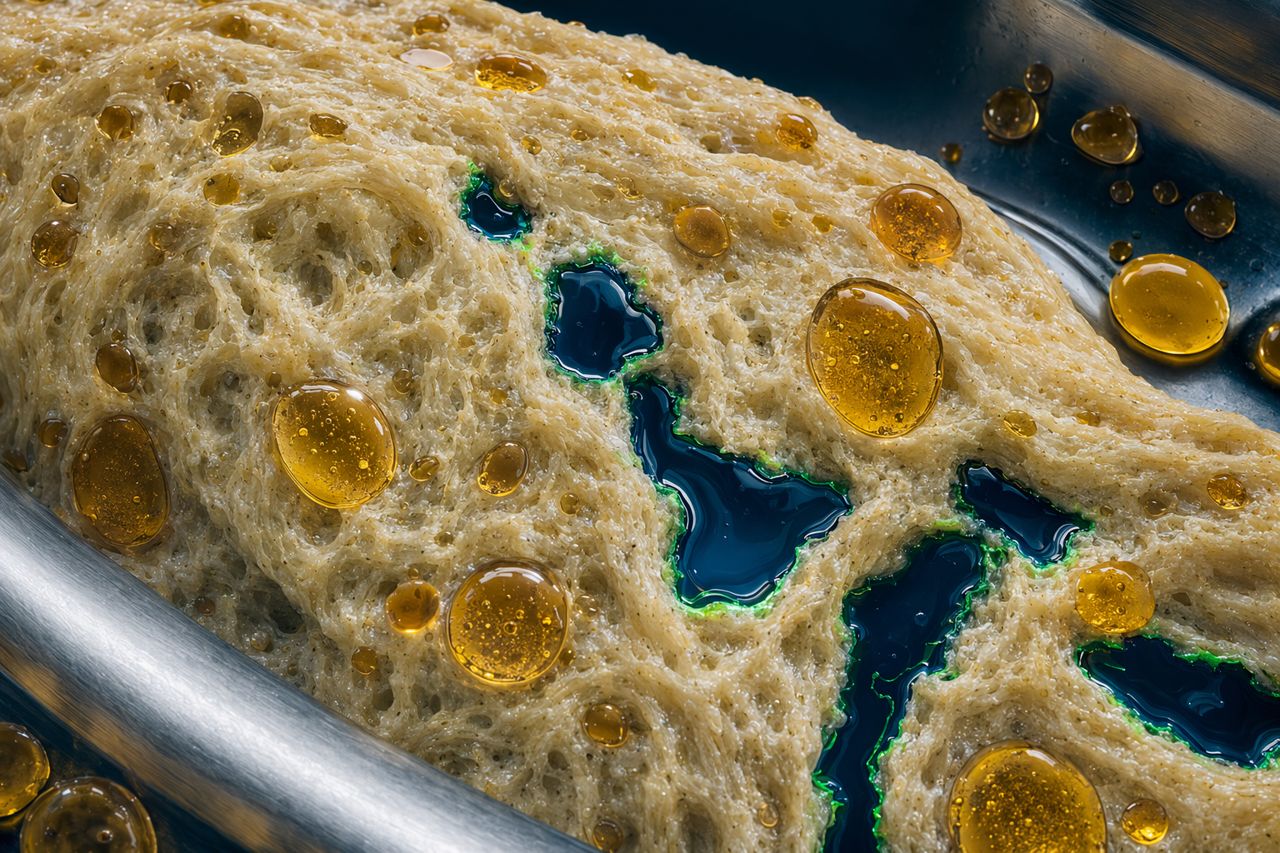
Lipase, properly known as Lipase (triacylglycerol acylhydrolase), acts at the oil-water interface. In dough, that interface is not theoretical: it exists between flour lipids, added shortening or oil, water phases, proteins, starch granules, and air cells formed during mixing and proofing.
By modifying triglycerides and related lipid structures, lipase can generate more polar, surface-active lipid fragments. These compounds support the formation and stability of dough interfaces, helping the dough matrix retain gas and maintain a more uniform structure through mixing, proofing, baking, cooling, and slicing.
Bakery outcomes buyers care about
- Improved loaf volume and symmetry through stronger gas-cell stabilization.
- Finer, more even crumb grain in pan bread, buns, rolls, and sandwich-style products.
- Better dough machinability with reduced stickiness and more stable sheeting or dividing behavior.
- Enhanced emulsification behavior in systems using oils, shortenings, dairy ingredients, or egg components.
- More consistent processing across flour variation, line speed changes, and hold-time pressure.
- Support for softness and resilience by improving the lipid-protein-starch interactions that shape crumb texture.
- Potential emulsifier optimization where formulation strategy allows partial reduction or cleaner-label positioning.
Who buys bakery lipase in bulk
- Industrial bread and bun bakeries that want steadier volume and crumb across flour lots and line speeds.
- Flour-improver and premix blenders who build lipase into their own improver products for bakeries.
- Flour mills that treat flour for bakery customers.
- Biscuit, cracker and snack bakers working on dough handling and baked texture.
- Noodle and steamed-bun makers working with wheat doughs on similar lines.
- Ingredient distributors who resell bakery enzymes to local bakeries.
Where lipase fits
Bread, buns, and rolls
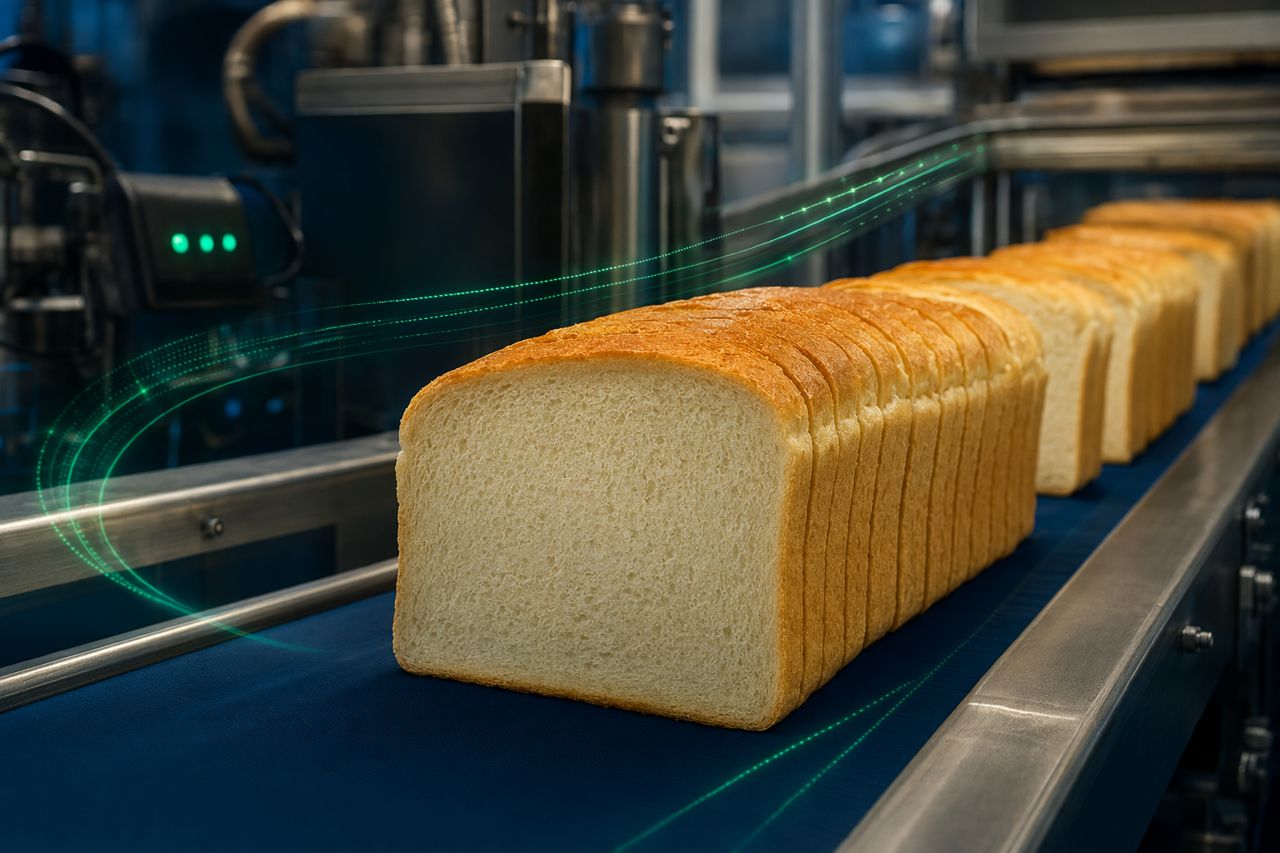
In high-throughput bread lines, small changes in dough strength and gas retention show up quickly as volume drift, sidewall weakness, uneven crumb, and slicing losses. Lipase supports a stronger interfacial network around gas cells, helping dough withstand mechanical stress while maintaining expansion during proof and early baking.
Common evaluation points include:
- proof height and proof tolerance
- oven spring and finished product volume
- crumb cell uniformity
- crust shape and sidewall stability
- slicing behavior and compression recovery
- softness profile during shelf life
Flour improvers and bakery premixes
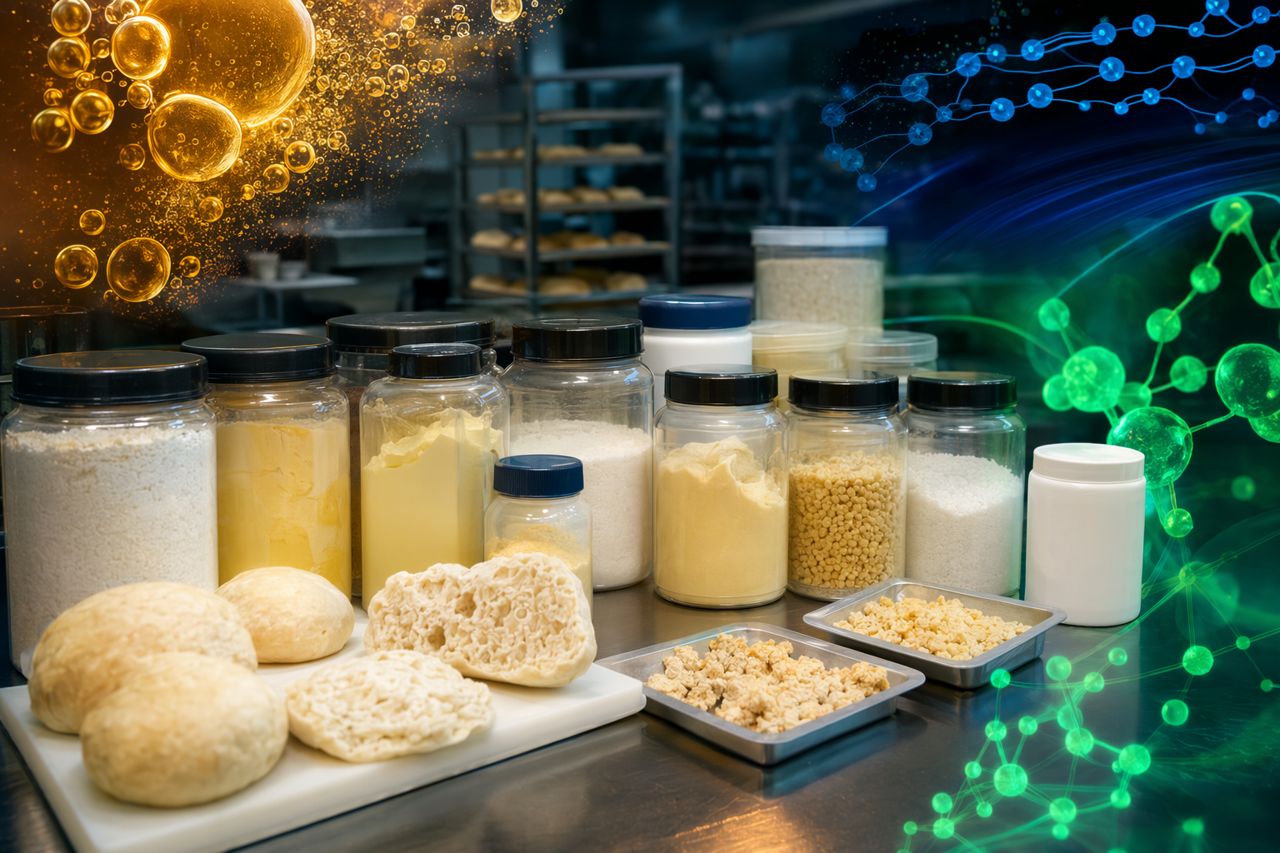
Lipase can be used as a functional component in improver systems alongside oxidizing agents, amylases, xylanases, ascorbic acid, emulsifiers, or hydrocolloids. The goal is not simply to add another enzyme, but to build a balanced system where lipid modification supports dough strength without over-tightening, gumminess, or irregular crumb.
Lipase Enzyme Solutions works with ingredient blenders and bakery R&D teams to position lipase within complete premix architectures, including dry blends, concentrate formats, and site-specific bakery improvers.
Flatbreads, tortillas, and flexible dough systems
For sheeted and flexible bakery products, dough handling is often as important as final volume. Lipase can contribute to controlled extensibility, reduced surface tack, and more uniform processing through sheeting, cutting, baking, cooling, and packing.
Relevant performance markers include:
- dough release from rollers and belts
- sheet smoothness
- diameter or shape consistency
- foldability after cooling
- reduced cracking or tearing
- texture stability during distribution
Frozen and retarded dough
Cold-chain bakery systems place extra stress on gas-cell stability and dough structure. Lipase can help support the lipid interfaces that influence freeze-thaw tolerance, proof recovery, and final baked volume after storage or delayed processing.
For frozen dough applications, formulation work should evaluate the enzyme system together with yeast level, flour strength, shortening type, emulsifier load, freezing curve, thaw profile, and proofing conditions.
Why the interface matters
Bakery dough is a complex emulsion, foam, and viscoelastic matrix at the same time. Lipase works where these phases meet. That is why its effect depends on substrate availability, water distribution, mixing energy, fat type, flour quality, and process timing.
The best bakery lipase programs focus on controlled interfacial modification, not excessive hydrolysis. The objective is to create enough surface-active lipid material to improve dough structure without creating off-notes, slack dough, or unwanted texture changes.
Formulation considerations
Flour and lipid profile
Different flours bring different native lipid levels and polar lipid balance. Hard wheat pan bread systems, soft wheat buns, wholegrain formulas, and enriched doughs can respond differently. Lipase Enzyme Solutions recommends screening lipase against the actual production flour or premix base whenever possible.
Added fat and emulsifier strategy
Lipase performance is influenced by the type and level of shortening, oil, butter, dairy fat, lecithin, mono- and diglycerides, DATEM, SSL, or other emulsifying components. In some formulas, lipase reinforces existing emulsifier systems. In others, it may allow a more efficient emulsifier strategy after validation.
Mixing and process window
Because lipase acts during dough development and rest periods, process conditions matter. Mixing intensity, dough temperature, fermentation time, hold time, proof humidity, and line speed can all change the visible result. Trial design should test the real production window, not only ideal bench conditions.
Sensory and quality control
The right lipase program should improve structure without introducing soapy, fatty, or rancid notes. Sensory checks should be paired with texture, volume, crumb, and machinability data to confirm the formulation is technically sound and commercially acceptable.
How to evaluate lipase in a bakery trial
A practical bakery trial should compare a current control formula against one or more lipase-containing prototypes under the same flour lot, mixing profile, fermentation schedule, and bake settings.
Recommended trial readouts:
- Dough behavior: mixing tolerance, stickiness, elasticity, extensibility, divider performance, sheeting release.
- Proof performance: gas retention, proof height, tolerance to over-proofing, surface stability.
- Bake results: oven spring, product volume, shape, crust integrity, sidewall strength.
- Crumb quality: cell size distribution, grain uniformity, softness, resilience, sliceability.
- Shelf-life texture: firmness trend, compression recovery, eating quality over storage.
- Line performance: waste, rework, stoppages, belt release, packaging defects.
Supply formats and implementation
Lipase can be specified for industrial ingredient systems where dispersion, blend stability, and process fit are critical. Available supply options depend on application, handling preference, regulatory target market, and formulation constraints.
Typical implementation routes include:
- bakery improver blends
- flour treatment systems
- premix concentrates
- direct bakery dosing systems
- frozen dough formulations
- private-label ingredient programs
What to send with a bakery lipase inquiry
- The product you make: pan bread, buns, flatbreads, frozen dough, crackers, or an improver or premix you sell on.
- How you will use the lipase: dosed straight at the bakery, or built into your own improver blend.
- Your current improver system: emulsifiers (such as DATEM or SSL) and other enzymes already in the formula.
- Quantity per order or per month, and the destination country.
- Preferred format: powder for dry blends, or another format if your line needs it.
Pricing, pack format and lead time are quoted per order. With the quote, we tell you which documents are available for that grade.
Request a bakery lipase quote
Tell us what you make, what your current process challenge is, and what result you need to improve. Lipase Enzyme Solutions will help match the lipase profile to your flour system, fat phase, processing conditions, and commercial specification.
Request a quote for bulk bakery lipase: send your product, quantity and destination.