
Wholesale lipase for dishwash and warewash detergent makers, institutional cleaning brands and private-label fillers who need grease removal on mixed food soils. Grade, format and pricing are quoted per order against your detergent base.
Request a quote: send the product you make, the quantity per order or per month, and the destination country. Request a quote
Lipase in Dishwashing and Foodservice Cleaning
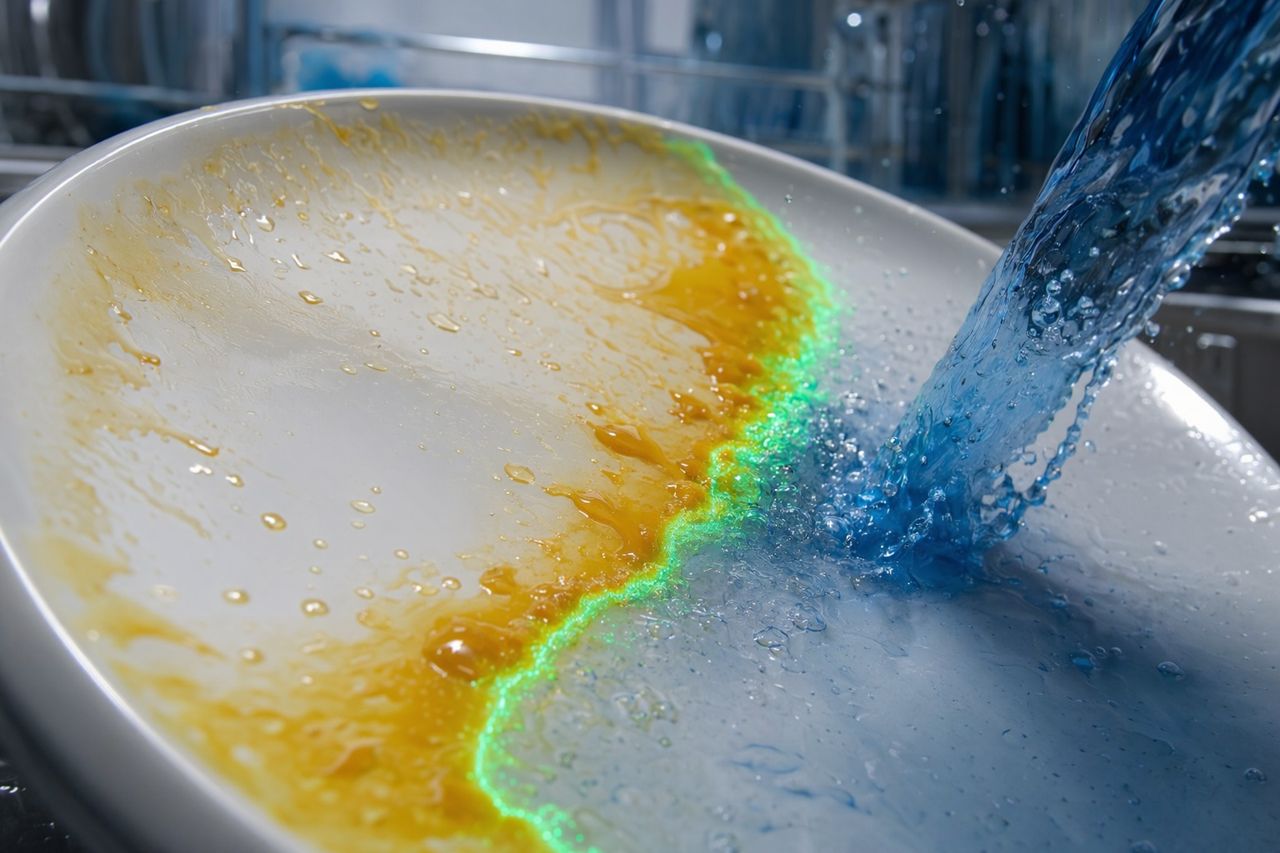
Greasy soils are stubborn because they do not simply sit on a surface. Fats, oils, and food-derived lipids spread into thin hydrophobic films, bind particulate soil, and resist rinse-off under short wash cycles. Lipase is designed for enzyme-assisted cleaning systems that target those lipid residues at the water–oil interface.
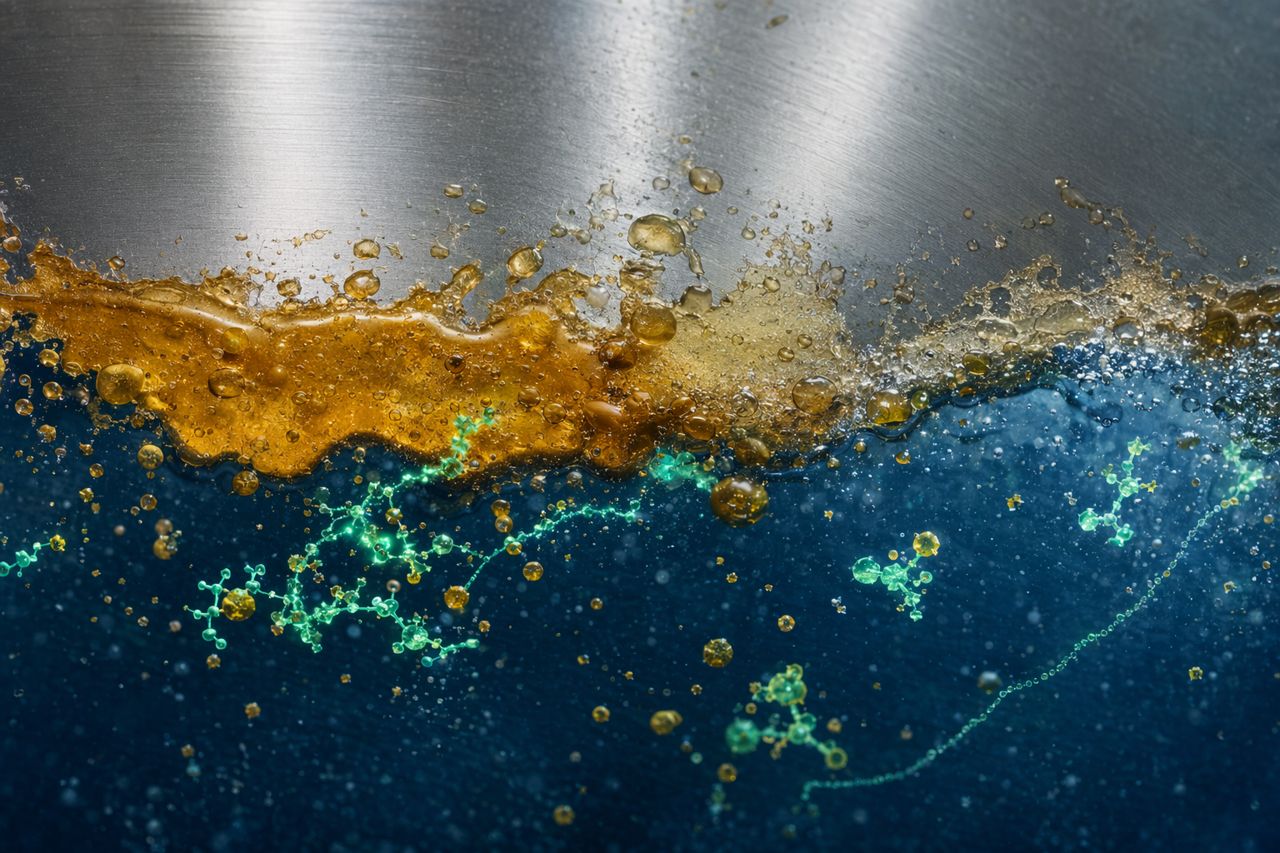
Lipase (triacylglycerol acylhydrolase) catalyzes the hydrolysis of triglycerides into smaller, more dispersible fragments. In practical cleaning language, that means less tenacious grease, improved emulsification support, and cleaner release from plates, cookware, utensils, processing equipment, and foodservice surfaces.
Why lipase belongs in modern cleaning systems
Foodservice cleaning is a fast, variable environment: mixed soils, changing water quality, compact wash windows, and pressure to reduce rewash. Lipase contributes a biochemical mechanism that complements surfactants, alkalinity, builders, and mechanical action.
Where it helps most:
- Baked-on fats and pan residues
- Dairy, butter, cheese, cream, and sauce films
- Frying oils and oxidized kitchen grease
- Meat drippings and mixed protein-lipid soils
- Starch-fat residues from bakery, rice, pasta, and batter applications
- Greasy biofilms and soil layers on food-contact equipment
What lipase does in the wash
Lipase acts at the boundary between aqueous wash liquor and lipid soil. That interfacial behavior is especially relevant in dishwashing, where oils are dispersed, redeposited, and lifted repeatedly during the same cycle.
Core process effects
- Breaks down triglyceride-rich soils into smaller lipid fragments that are easier for surfactants to suspend.
- Supports faster grease release from ceramic, glass, stainless steel, plastic, and coated cookware surfaces.
- Reduces oily film carryover that can dull glassware, leave residues on plastics, or interfere with visual cleanliness.
- Improves performance on mixed food soils when paired with protease and amylase in multi-enzyme systems.
- Extends cleaning reach into textured surfaces, seams, utensils, baskets, screens, and equipment zones where mechanical action is limited.
Application areas
Automatic dishwashing detergents
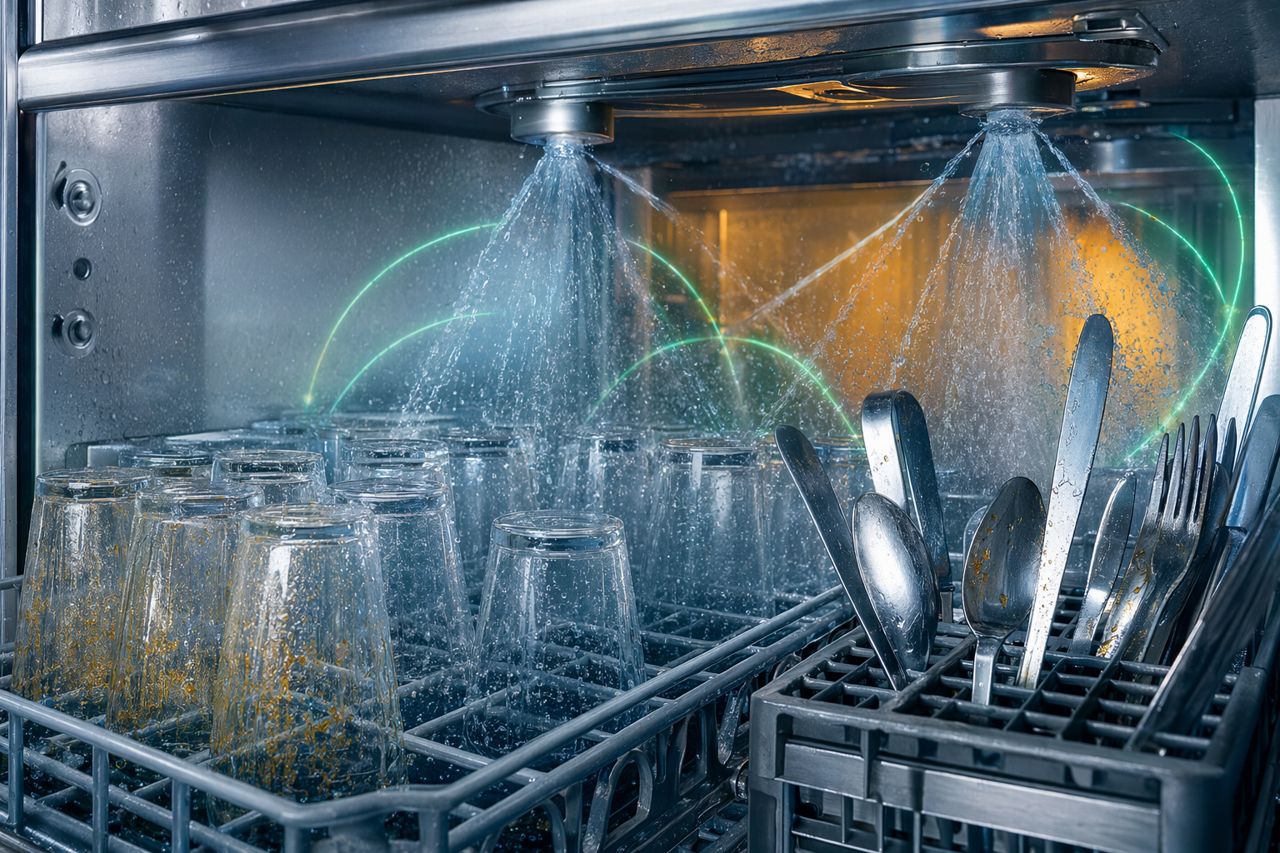
Lipase can be used in powders, tablets, capsules, and liquid systems where grease removal is a defined performance target. It is most valuable in formulas that must handle mixed meals, variable loading, and quick cycles without relying solely on aggressive chemistry.
Buyer-useful formulation goals:
- Better removal of oily residues under realistic dish loads
- Improved glass and plastic appearance after rinse
- Less visible spotting associated with greasy redeposition
- Enhanced cleaning of plates, cutlery, pans, and food prep tools
- More balanced performance across protein, starch, and lipid soils
Institutional and commercial dishwashing
In restaurants, hotels, cafeterias, and catering operations, cleaning performance is judged by throughput and consistency. Lipase supports systems built for repeated exposure to dairy, sauces, oils, dressings, and cooked fats.
Typical use contexts:
- Conveyor dish machines
- Door-type and undercounter commercial dishwashers
- Presoak and manual soak systems
- Enzyme-assisted pot and pan cleaning
- High-turnover glassware and tableware programs
Foodservice hard-surface cleaning
Beyond dishware, lipase can be applied in enzyme-assisted cleaners for surfaces exposed to greasy soils.
Relevant surfaces and equipment:
- Stainless benches and prep tables
- Fryer surrounds and splash zones
- Food processing tools and utensils
- Grease-exposed drains and floor areas
- Conveyor components, trays, screens, and removable parts
Built for compatibility, not complexity
An industrial cleaning enzyme has to fit the system around it. Lipase is positioned for integration into detergent architectures that may include surfactants, builders, dispersants, chelants, alkalinity sources, oxygen chemistry, and other enzymes. For laundry rather than dishwashing, this guide to cellulase for fabric care covers pH, temperature, dosage, and QC checks for cellulase in detergent formulations.
Formulation considerations
- pH environment: Select lipase grades according to the wash profile and detergent architecture.
- Thermal exposure: Match the enzyme to expected storage, wash, and processing conditions.
- Surfactant system: Balance grease wetting, emulsification, and enzyme stability.
- Oxidant exposure: Use appropriate formulation strategy where bleaching components are present.
- Physical format: Choose a format aligned with powder, tablet, capsule, liquid, or concentrate manufacturing.
- Enzyme stack: Pair with protease, amylase, cellulase, or mannanase where mixed food soils are the cleaning challenge.
Performance language that matters to B2B buyers
We help teams evaluate lipase through process-relevant outcomes rather than abstract enzyme claims.
Common evaluation targets include:
- Lower residual grease after wash
- Reduced rewash rate on oily loads
- Improved cleaning on aged or heated lipid soils
- Better removal of dairy and sauce films
- Cleaner stainless surface appearance
- Reduced oily redeposition onto plastics and glassware
- Stable performance after detergent processing and storage
How lipase works with the rest of the detergent system
Lipase is not a replacement for surfactants, alkalinity, or mechanical action. It is a targeted catalytic tool that makes lipid soils more manageable within the wash environment.
System role by component
- Lipase: Converts triglyceride-rich grease into more dispersible fragments.
- Surfactants: Wet the surface, loosen soil, and suspend hydrophobic residues.
- Builders and chelants: Manage water hardness and support soil dispersion.
- Alkalinity: Helps swelling, saponification support, and broad cleaning power.
- Protease and amylase: Address protein and starch fractions in mixed food soils.
- Rinse aids: Reduce spotting and support final surface appearance.
The strongest results often come from the right balance, not the highest possible dose of any single ingredient.
Supply priorities for detergent manufacturers
Lipase Enzyme Solutions supports industrial buyers who need enzyme selection aligned with manufacturing realities.
What we can discuss with your team
- Target application and detergent format
- Soil profile and wash conditions
- Compatibility with existing formulation components
- Desired stability and handling profile
- Packaging and production requirements
- Pilot evaluation planning
- Commercial supply expectations
Request pricing or a formulation discussion
Tell us what you are building: automatic dishwashing, institutional warewash, pot-and-pan systems, foodservice surface cleaners, or enzyme-assisted concentrates. We will help identify the lipase format and technical fit for your process.
Request a bulk lipase quote
Wholesale and bulk supply for manufacturers, formulators and resellers. To get a quote, send the product you make, the quantity per order or per month, and the destination country, and tell us your application and preferred format (powder, liquid or granule). Pricing, pack format and lead time are quoted per order, and we tell you which documents are available for that grade.