
Bulk lipase for oleochemical producers, ester and surfactant-intermediate makers and specialty chemical plants running hydrolysis, esterification or transesterification. Format and pricing are quoted per order against your feedstock and route.
Request a quote: send the product you make, the quantity per order or per month, and the destination country. Request a quote
Lipase for Oleochemical Processing
Lipase gives oleochemical teams a selective route for transforming fats and oils into higher-value fatty acids, esters, surfactant intermediates, lubricant components, plasticizer precursors, and specialty chemicals. Lipase Enzyme Solutions supports industrial buyers and application scientists working at the interface of triglycerides, alcohols, water, and process economics.
Controlled chemistry at the oil-water boundary
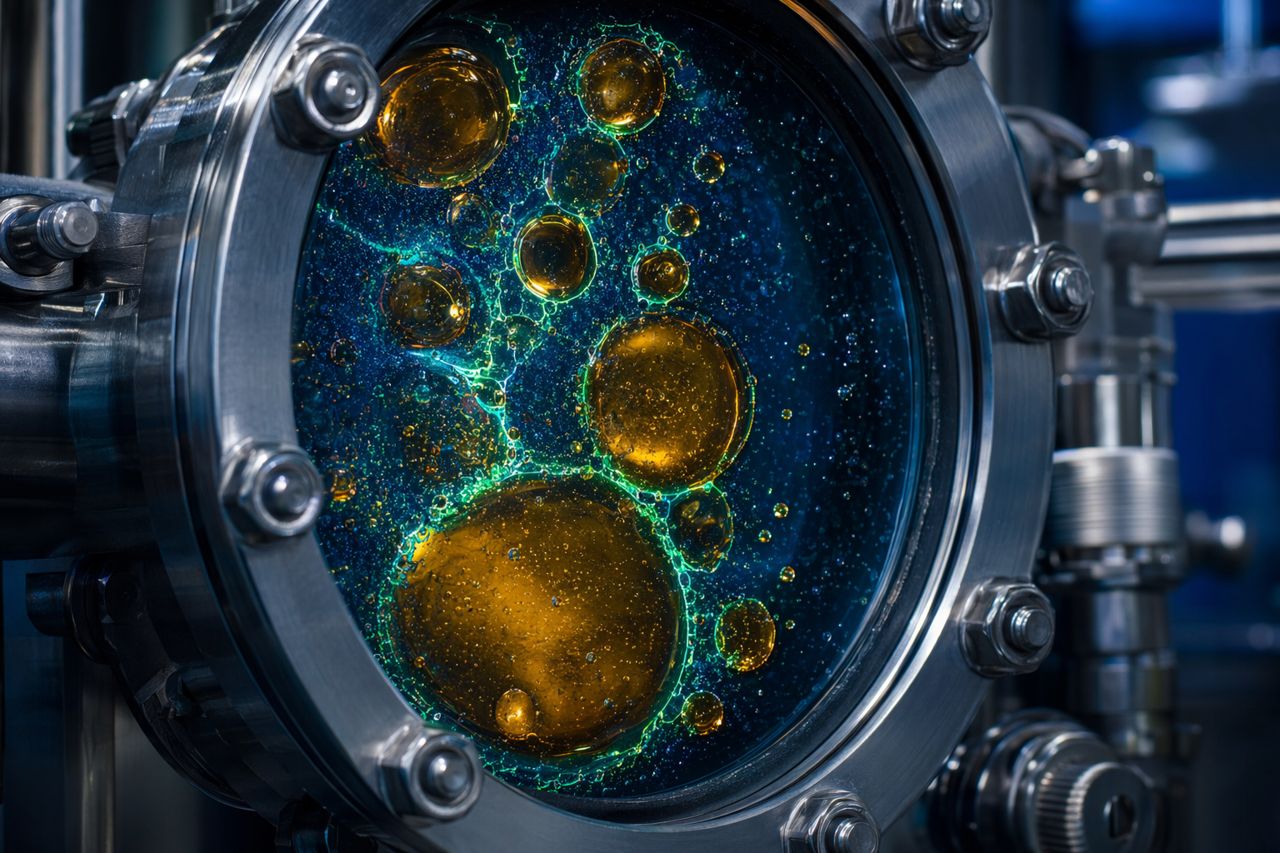
Lipase (triacylglycerol acylhydrolase) acts at lipid interfaces, where triglycerides and other hydrophobic substrates meet aqueous or polar phases. In practical oleochemical processing, that interfacial behavior can be used to drive:
- Hydrolysis of fats and oils toward fatty acid streams
- Esterification of fatty acids with alcohols for functional esters
- Transesterification of triglycerides or esters into tailored derivatives
- Interestification for structured lipid profiles and modified functionality
- Selective conversion where conventional high-heat chemistry may create unwanted color, odor, or side products
The value is not simply that lipase is enzymatic. The value is that it can help process teams adjust conversion pathways with greater control over feedstock sensitivity, product quality, and downstream separation.
Where lipase fits in oleochemical workflows
Fatty acid production
Lipase can support lower-severity splitting of triglyceride feedstocks, especially where thermal exposure, feedstock variability, or product appearance needs tighter control. It is relevant for vegetable oils, animal fats, specialty oils, and blended triglyceride streams.
Ester manufacturing
For esters used in lubricants, surfactant intermediates, emollient bases, plasticizer precursors, and specialty solvents, lipase can enable more targeted reaction conditions. Typical development priorities include conversion balance, alcohol tolerance, water management, product color, odor profile, and post-reaction purification load.
Surfactant and detergent intermediates
Lipase-assisted transformations can be used in routes where fatty acids, glycerides, or esters are converted into intermediates for nonionic surfactants, emulsifiers, wetting agents, and performance additives. Selectivity is useful when a narrow functionality window matters.
Bio-based lubricant and functional ester routes
High-value ester products often require a controlled balance of viscosity behavior, oxidative stability, low-temperature performance, and purity. Lipase can help evaluate milder synthesis routes for specialty ester portfolios where feedstock origin and processing severity both affect commercial positioning.
Process levers that matter
Lipase performance in oleochemicals depends on the physical chemistry of the reaction system as much as the enzyme itself. Lipase Enzyme Solutions focuses discussions around the parameters buyers actually need to control:
- Feedstock composition and free fatty acid profile
- Oil, alcohol, and water phase behavior
- Emulsion quality and interfacial area
- Alcohol addition strategy and solvent-free feasibility
- Temperature window and enzyme lifetime
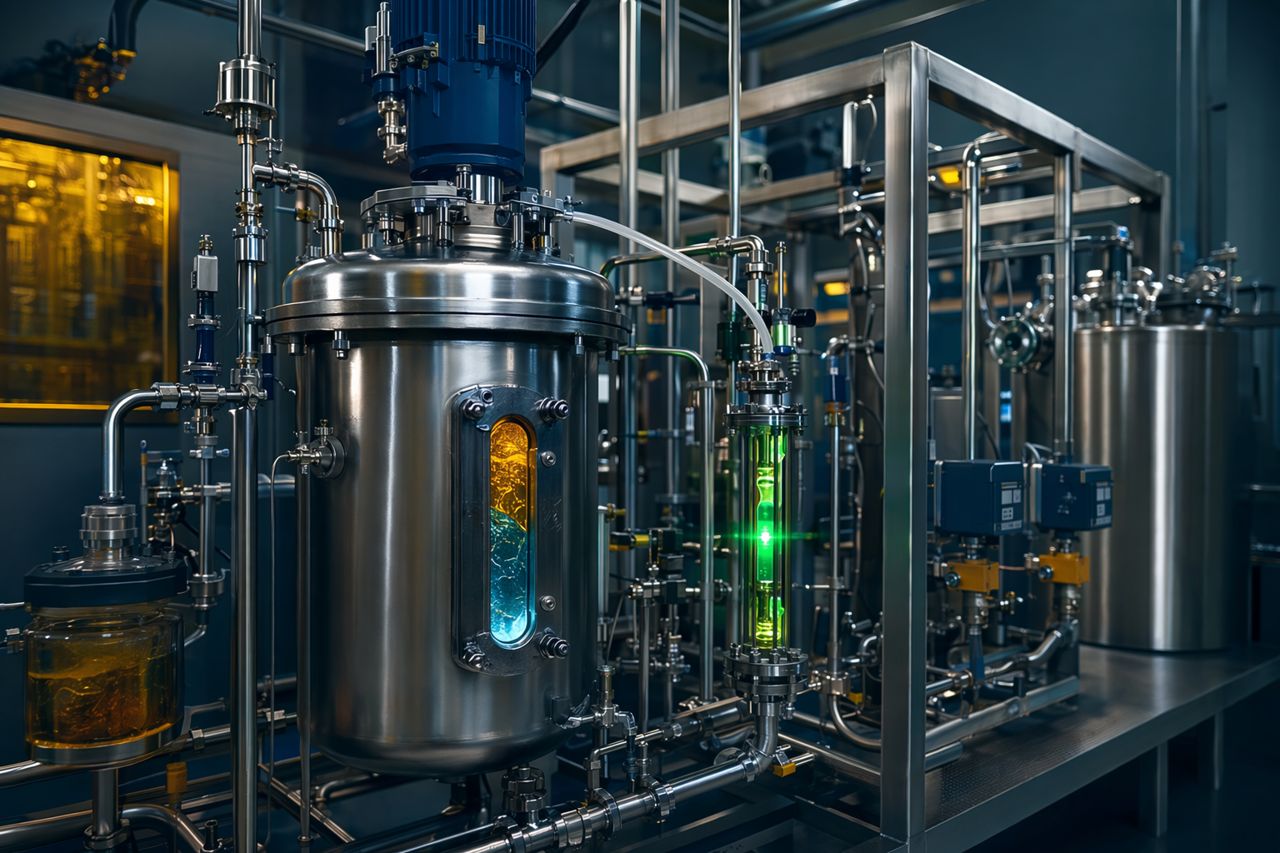
- Batch, loop, or packed-bed configuration
- Product inhibition, glycerol management, and separation path
- Immobilized versus liquid enzyme format
- Required product specification, not just conversion
Liquid and immobilized lipase options
Different oleochemical plants need different enzyme handling models.
Liquid lipase formats are often suitable for emulsified batch or semi-batch systems where the enzyme is dispersed into a controlled reaction medium. They can be useful for screening, hydrolysis-oriented workflows, and systems where recovery is not the primary design target.
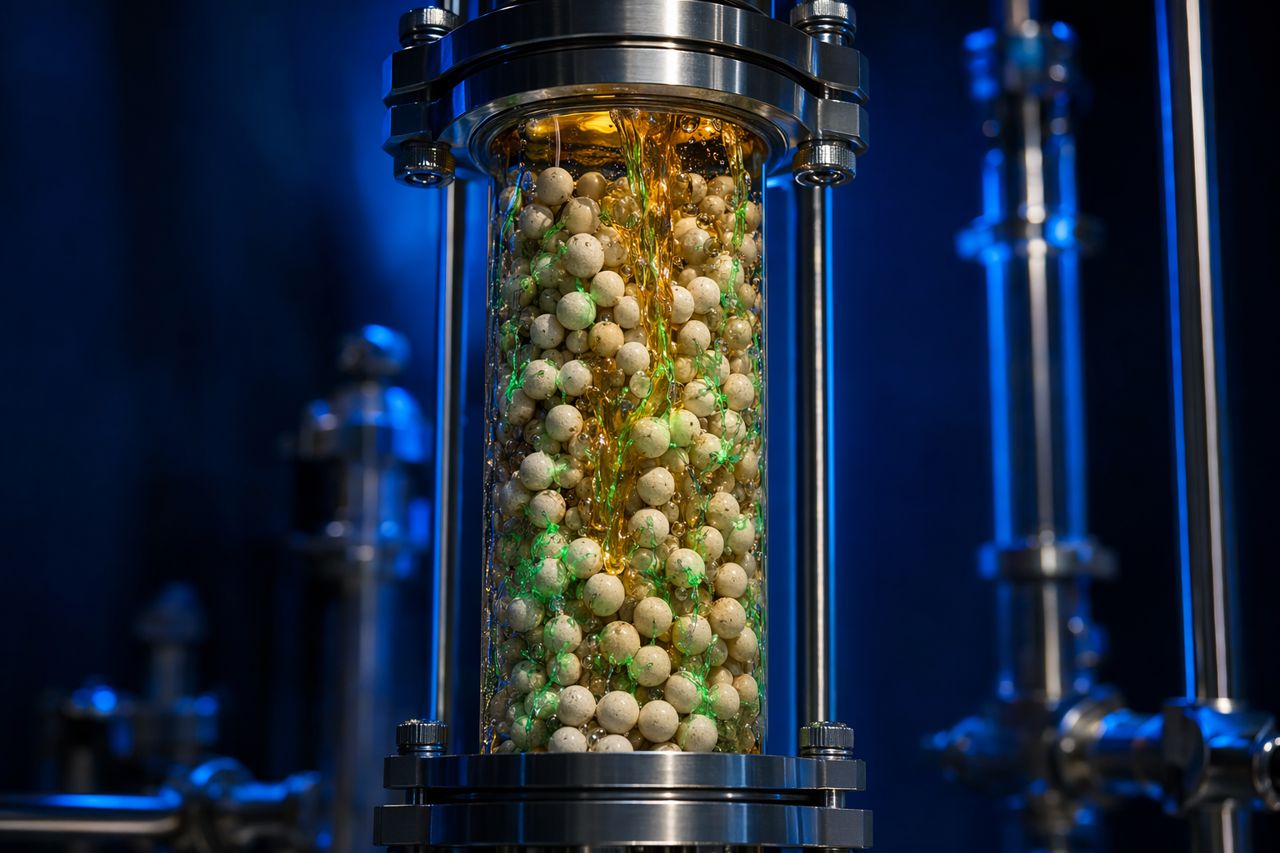
Immobilized lipase formats are often considered when separation, reuse, and continuous or repeated-batch operation are important. Packed-bed, recirculation, and loop systems can benefit from easier enzyme retention and a cleaner downstream phase split, provided the substrate stream is compatible with the support and operating conditions.
Benefits for industrial buyers
A lipase route may be worth evaluating when the current process is limited by harsh conditions, off-spec color, difficult byproduct removal, excess neutralization, or poor selectivity. Potential advantages include:
- Milder reaction conditions for sensitive feedstocks
- Reduced formation of unwanted side products
- More selective ester and fatty acid transformations
- Compatibility with renewable and bio-based positioning
- Lower downstream purification pressure in selected routes
- Flexible development from lab screening to pilot operation
- Potential integration into batch, semi-batch, loop, or packed-bed assets
Feedstocks and product targets
Lipase discussions commonly cover triglyceride-rich and fatty-acid-rich streams such as:
- Palm, palm kernel, coconut, soybean, rapeseed, sunflower, and specialty vegetable oils
- Tallow, fish oil, and other animal-derived lipid streams where permitted by the product route
- Acid oils, refined oils, blended feedstocks, and side streams requiring prequalification
- Fatty acids, partial glycerides, methyl esters, ethyl esters, and higher-alcohol ester systems
Target products may include fatty acid cuts, alkyl esters, polyol esters, glyceride derivatives, surfactant intermediates, lubricant base components, plasticizer precursors, and specialty chemical building blocks.
Development pathway
A practical lipase program should move through clear decision gates:
- Route definition — hydrolysis, esterification, transesterification, or interestification.
- Feedstock review — lipid profile, water content, acidity, impurities, metals, antioxidants, and expected variability.
- Format selection — liquid or immobilized lipase based on separation and operating model.
- Reaction mapping — temperature, phase behavior, alcohol strategy, residence time, and mixing.
- Product validation — conversion, residual substrates, color, odor, byproducts, and downstream fit.
- Scale-up review — heat transfer, mass transfer, enzyme retention, cleanability, and campaign economics.
Request pricing or technical fit guidance
Tell us your feedstock, target product, reaction route, and preferred operating format. Lipase Enzyme Solutions will respond with fit guidance, availability, and a quotation path for your project.
Request a bulk lipase quote
Wholesale and bulk supply for manufacturers, formulators and resellers. To get a quote, send the product you make, the quantity per order or per month, and the destination country, and tell us your application and preferred format (powder, liquid or granule). Pricing, pack format and lead time are quoted per order, and we tell you which documents are available for that grade.