
For detergent formulators, private-label brands and contract manufacturers putting lipase into powders, liquids and unit-dose products. Wholesale supply is quoted per order against your formulation.
Request a quote: send the product you make, the quantity per order or per month, and the destination country. Request a quote
Lipase compatibility in detergent formulations
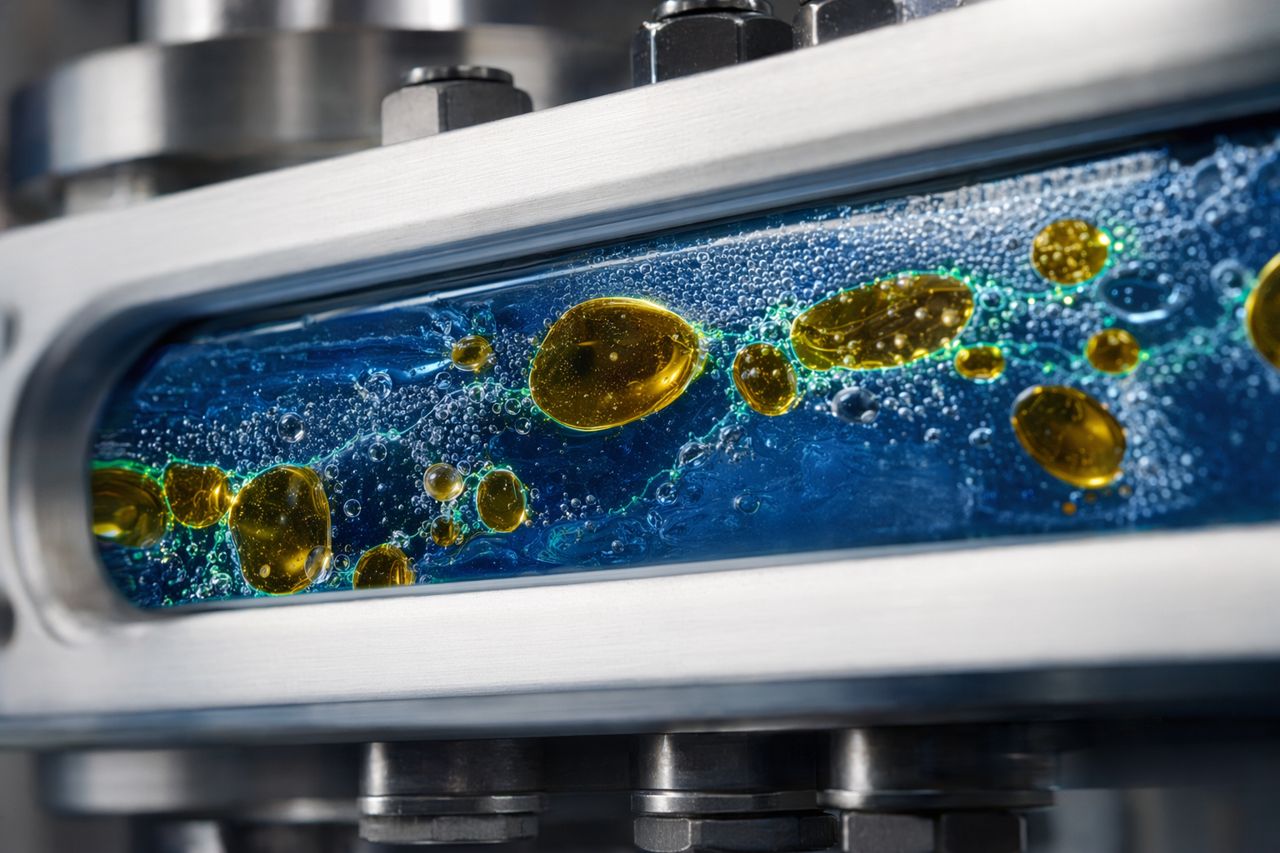
Lipase is added to detergents for one reason: to make oily soils easier to remove under real wash conditions. Lipase (triacylglycerol acylhydrolase) acts at the oil-water interface, hydrolyzing triglyceride soils into smaller, more dispersible fragments that surfactants can lift, suspend, and rinse away.
For formulators, the question is not whether lipase works in isolation. The question is whether it stays compatible inside a complete detergent system: surfactants, builders, alkalinity, solvents, oxidants, other enzymes, fragrance, water, packaging, and time.
This guide summarizes the formulation variables that most often determine lipase performance and storage stability.
What compatibility means in a detergent context
A detergent-compatible lipase should retain useful performance across three points in the product lifecycle:
- Manufacturing exposure — mixing order, shear, temperature, water content, and contact with concentrated raw materials.
- Storage stability — weeks to months in a liquid, gel, powder, tablet, or capsule environment.
- Wash performance — activity at dilution, soil interface contact, and cleaning contribution in the presence of surfactants, builders, and other actives.
A lipase can be stable in storage but underperform in wash if it cannot access the lipid interface. It can also be highly active in wash but unsuitable for a concentrated liquid if it is exposed to incompatible oxidants, solvents, or proteolytic enzymes.
Key formulation variables
Surfactant system
Lipase is interfacial by nature, so surfactants are both partners and competitors.
Generally favorable:
- Balanced anionic and nonionic surfactant blends that emulsify fat without fully blocking the enzyme from the lipid interface.
- Nonionic surfactants that improve soil wetting and dispersion.
- Structured systems where enzyme exposure to harsh concentrated surfactant phases is controlled.
Watch-outs:
- Very high surfactant concentration during premixing.
- Strong denaturing surfactant environments before dilution.
- Systems that over-stabilize emulsions and reduce lipase access to triglyceride-rich domains.
Practical formulation note: Add lipase after the most aggressive surfactant and builder phases are diluted or structured, unless the enzyme format is designed for direct high-concentration contact.
pH and alkalinity
Laundry detergents often operate in mildly to strongly alkaline environments. Lipase selection should match both storage pH and wash pH.
Formulation implications:
- Alkalinity can support cleaning but may accelerate enzyme stress during storage.
- Liquid detergents require attention to pH drift over time.
- Powders and tablets may expose enzymes to local high-pH microenvironments when moisture is present.
The best compatibility screen compares lipase performance before and after storage at the intended product pH, not only in a simplified buffer system.
Builders, chelants, and salts
Builders improve detergent performance by controlling water hardness and increasing soil removal efficiency. They also change ionic strength and water availability around the enzyme.
Common considerations:
- Citrates, carbonates, silicates, zeolites, phosphonates, and polymeric dispersants can alter enzyme hydration and surface charge interactions.
- High salt load can improve preservation in some liquids but can also stress enzyme conformation.
- Chelants can support stability by reducing metal-catalyzed degradation, especially where trace metals are present.
Compatibility should be checked in the final builder package rather than one ingredient at a time.
Bleach and oxidizing systems
Oxidants are a major compatibility risk. Lipase is a protein and can be damaged by oxidative chemistry.
Higher-risk systems include:
- Peroxide sources
- Peracids or peracid precursors
- Chlorine-based oxidants
- Strong oxidizing boosters
Mitigation approaches:
- Use physical separation in powders, tablets, or multi-compartment formats.
- Select coated or encapsulated enzyme formats for dry systems.
- Control moisture and avoid direct contact with bleach activators during storage.
- Evaluate sequential release where the product format allows it.
For liquid detergents containing active oxidants, lipase compatibility requires especially careful format and stability testing.
Other enzymes
Multi-enzyme detergents often combine lipase with protease, amylase, cellulase, mannanase, or pectinase. The largest risk is protease exposure during storage.
Best practices:
- Use enzyme formats and stabilizer systems designed for multi-enzyme blends.
- Control water activity and free water in concentrated liquids.
- Avoid long hold times where lipase is exposed to protease before final stabilization.
- Test the enzyme blend as a system, not as separate enzyme components.
In wash, enzyme combinations can be strongly complementary: lipase attacks fat, protease targets proteinaceous residues, and amylase targets starch-based soils. In the bottle or box, however, their compatibility depends on formulation architecture.
Solvents, hydrotropes, and preservatives
Liquid detergents often use solvents and hydrotropes for clarity, viscosity, fragrance incorporation, or phase stability. These materials can influence lipase stability.
Evaluate carefully:
- Alcohols and glycol ethers
- Hydrotropes used for concentrated surfactant systems
- Fragrance solubilizers
- Preservatives and biocidal ingredients
- High-fragrance formulations
Some solvents improve product handling but reduce enzyme storage life at elevated exposure. A practical screen should include the final fragrance and preservative package, not a fragrance-free base only.
Liquid vs powder detergent compatibility
Liquid detergents
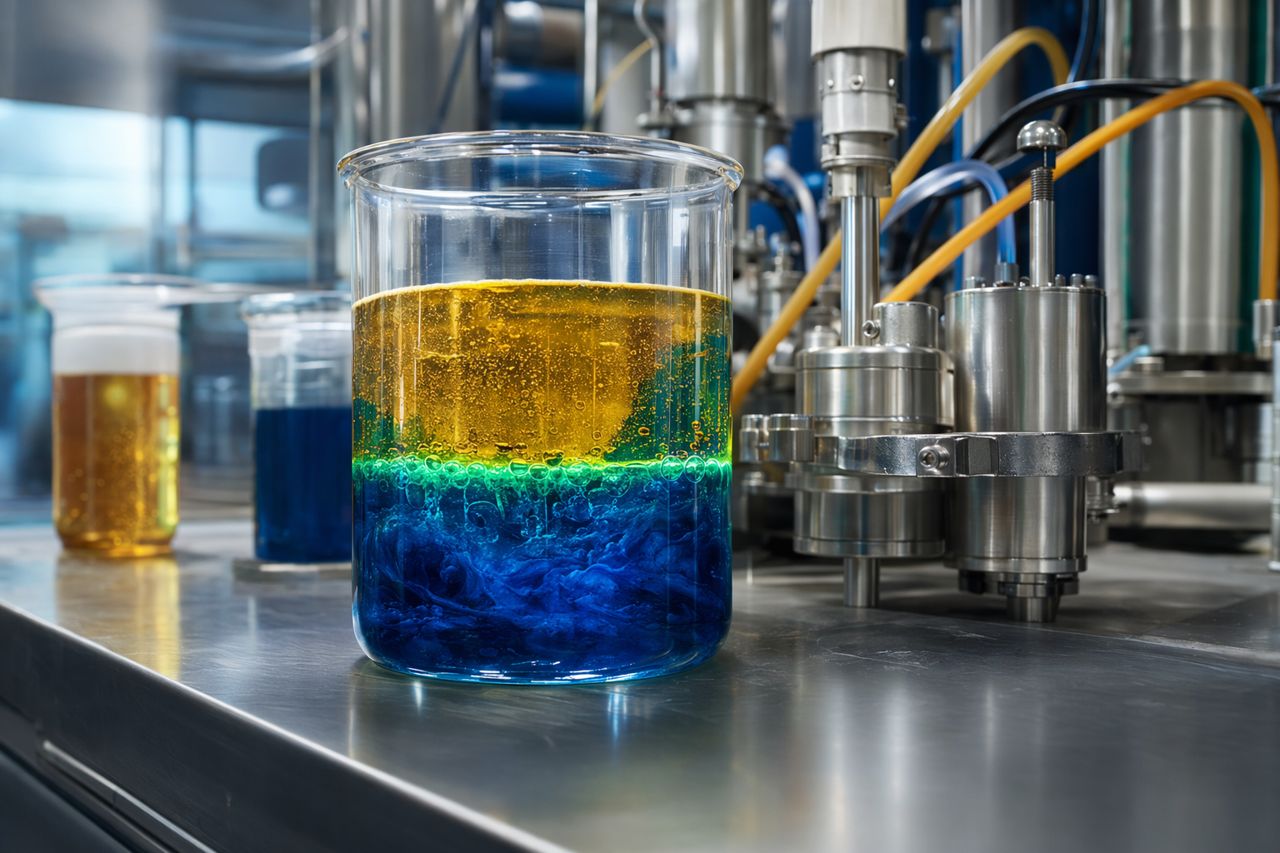
Liquid formulations expose lipase continuously to water, surfactants, pH, solvents, preservatives, and other enzymes. Stability depends on the whole matrix.
Priority checks:
- Storage performance in the finished liquid
- Viscosity and phase stability after enzyme addition
- Compatibility with preservative system
- Compatibility with fragrance and dye package
- Residual cleaning performance after warm storage
- Protease co-formulation stability, if applicable
Powder detergents
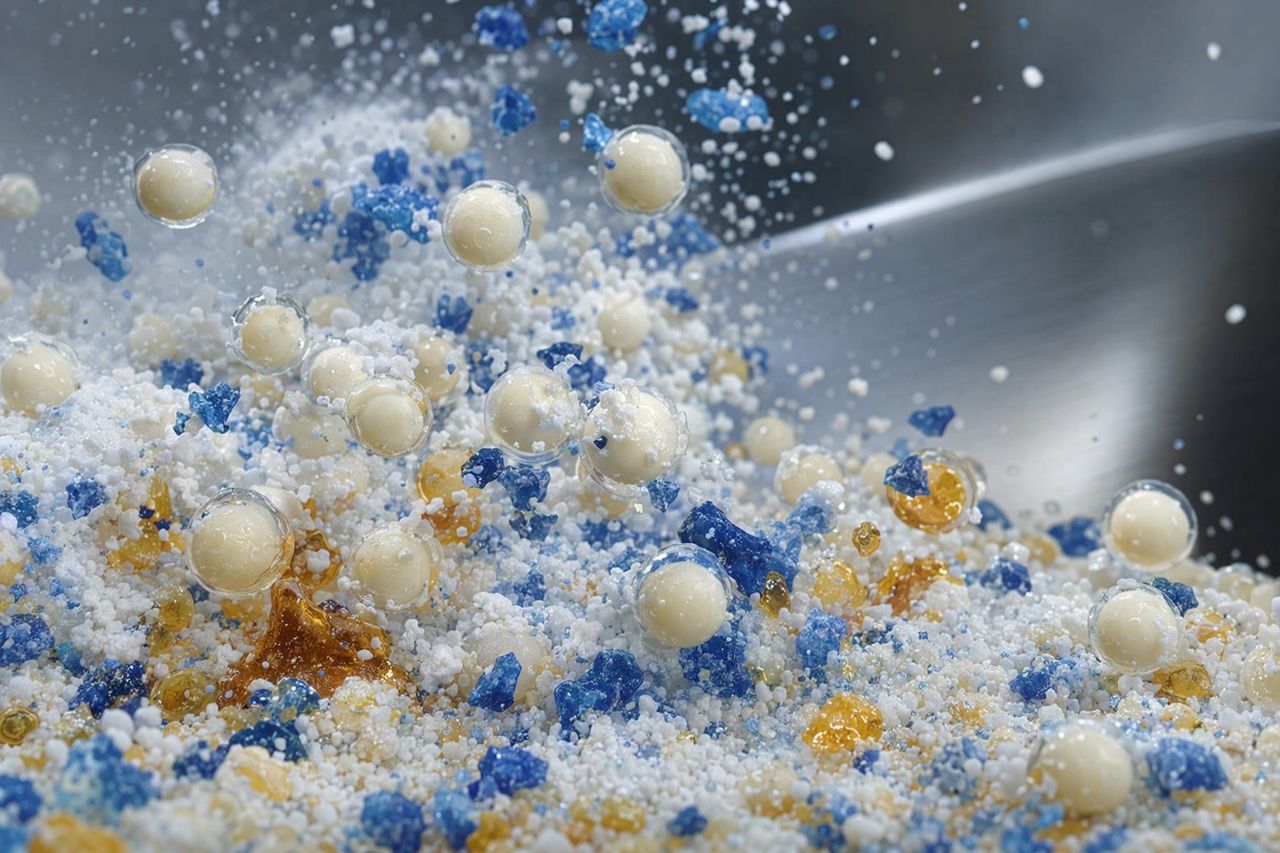
Powder systems reduce continuous aqueous exposure but introduce risks from dusting, mechanical attrition, moisture pickup, oxidants, and local chemical concentration.
Priority checks:
- Granule integrity during blending and conveying
- Moisture control through packaging and storage
- Physical separation from bleach components
- Dust management and worker exposure controls
- Dissolution and release timing in the wash
Tablets, pods, and unit-dose formats
Unit-dose formats can improve separation and dosing precision but may expose lipase to concentrated surfactants, films, plasticizers, and low-water liquid phases.
Priority checks:
- Enzyme stability in each compartment
- Film compatibility and moisture migration
- Release timing after dissolution
- Contact with high-solvent or high-surfactant phases
- Stability under transport temperature cycling
Compatibility testing plan for detergent development
A useful detergent compatibility program should be staged and decision-oriented.
1. Define the performance target
Clarify the intended role of lipase:
- Sebum and body oil removal
- Cooking oil and triglyceride stain removal
- Collar and cuff cleaning support
- Low-temperature wash improvement
- Premium multi-enzyme positioning
- Sustainability goal through lower wash temperature or reduced surfactant load
2. Screen in the real base formula
Start with the actual detergent base whenever possible. Model systems are useful for diagnosis, but final compatibility must be judged in the finished formulation.
Include:
- Full surfactant blend
- Builder and chelant package
- pH adjusters
- Solvents and hydrotropes
- Preservatives
- Fragrance and dye
- Other enzymes
- Bleach system, if present
3. Stress under relevant storage conditions
Use storage conditions that represent expected manufacturing, warehousing, shipping, and consumer handling. Compare initial and aged samples for cleaning performance, physical appearance, odor, viscosity, phase stability, and enzyme contribution in wash.
4. Confirm wash performance on target soils
Use stain panels and fabric types that match the market claim. Lipase benefit is most visible on lipid-rich stains and soils, especially after repeated exposure where residual fats can accumulate in fibers.
5. Check process fit
A compatible lipase must also fit the plant.
Review:
- Addition point
- Mixing shear
- Hold time before packaging
- Exposure to concentrated raw materials
- Temperature during processing
- Pumping and transfer conditions
- Dust control for dry formats
- Cleaning and changeover practices
Formulation guidance by ingredient class
| Ingredient class | Compatibility concern | Formulation approach |
|---|---|---|
| Anionic surfactants | Denaturation risk at high concentration | Add lipase after dilution or use protected formats |
| Nonionic surfactants | Can improve wetting but affect interface access | Optimize blend for soil removal, not enzyme exposure alone |
| Builders | Ionic strength and local pH effects | Test in final builder package |
| Bleach systems | Oxidative protein damage | Separate physically or use protected dry formats |
| Protease | Lipase degradation during storage | Stabilize, separate, or validate multi-enzyme matrix |
| Solvents | Conformational stress in liquids | Screen final solvent and fragrance package |
| Fragrance | Solubilizer and oil-phase interactions | Test fragranced product, not only base formula |
| Preservatives | Protein compatibility and pH dependence | Confirm stability in finished liquid |
| Moisture | Accelerates chemical and enzymatic stress | Control water activity and packaging barrier |
Specification questions to ask before selecting a lipase
Before requesting pricing or samples, prepare the key formulation details. This shortens the technical exchange and reduces reformulation loops.
- Is the product liquid, powder, tablet, capsule, gel, or paste?
- What is the target wash pH?
- Is bleach present, and is it stored in direct contact with the enzyme?
- Will protease be included?
- What surfactant classes dominate the formula?
- Are solvents, hydrotropes, high fragrance levels, or preservatives present?
- What processing temperature and hold time will the enzyme experience?
- What shelf-life expectation must be met?
- Which soils and fabrics define success?
- Is the priority low-temperature cleaning, premium stain removal, cost-in-use, or enzyme blend optimization?
Practical takeaways
- Lipase performance depends on access to the lipid-water interface, not just enzyme loading.
- Compatibility must be proven in the finished detergent matrix.
- Oxidants, protease, solvents, moisture, and concentrated surfactants are the most common risk areas.
- Liquids require matrix stabilization; powders require granule protection and moisture control.
- The best formulation decision is based on retained cleaning contribution after storage, not isolated enzyme behavior.
Request detergent lipase pricing
Share your formulation format, target market, and compatibility constraints. Lipase Enzyme Solutions can help narrow lipase format options for detergent development, pilot evaluation, and commercial supply planning.
Request a bulk lipase quote
Wholesale and bulk supply for manufacturers, formulators and resellers. To get a quote, send the product you make, the quantity per order or per month, and the destination country, and tell us your application and preferred format (powder, liquid or granule). Pricing, pack format and lead time are quoted per order, and we tell you which documents are available for that grade.